ServicesWalkways and Sidewalks
Walkways and Sidewalks in Laguna Niguel
A good path should feel steady underfoot, shed water away from your home and look like it belongs with the house. We form and pour new concrete walkways and sidewalks, and we walk you through each finish so you know how it grips, wears and cleans before anything is poured.
A new path from the street to your door
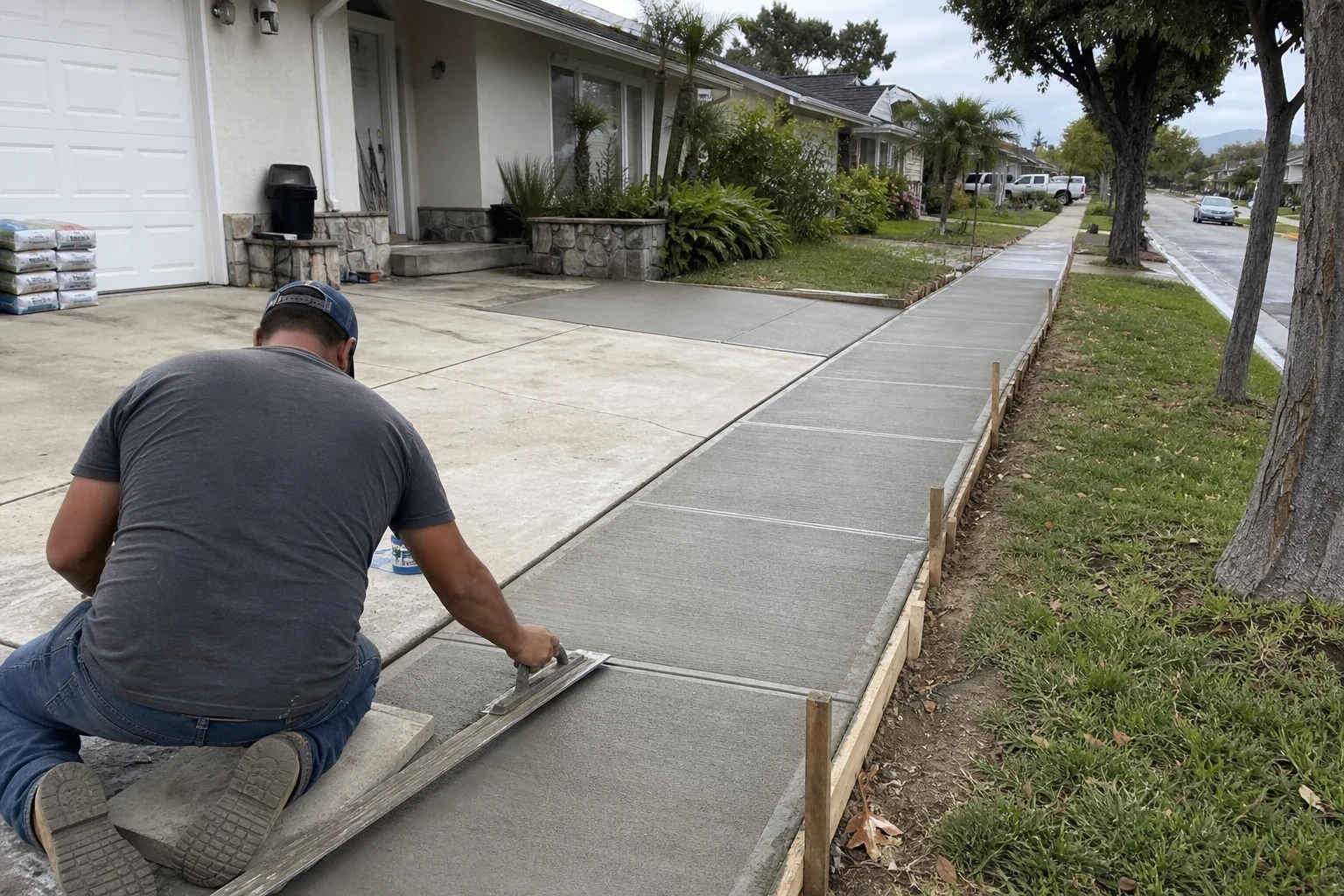
We build new walkways and sidewalks: the front entry path, the run along the side of the garage, the link from the patio to the gate, or a fresh section of sidewalk out front. Most residential walkways are poured about four inches thick over a compacted gravel base, with a gentle slope so rain runs off instead of pooling against the house.
The finish is where most of the decisions happen. A broom finish is simple and grippy. Exposed aggregate shows the small stones in the mix and hides dirt well. A salt finish gives a soft, pitted texture that stays cooler under bare feet. Stamped concrete can mimic stone or brick but needs resealing every few years. We explain each one plainly, and you choose what suits your home.
What your walkway project includes
Layout and grading
We mark the path, check the width you want and set the slope, usually about a quarter inch per foot away from the house.
Removal of old material
If an old path, pavers or gravel are in the way, we break it out and haul it off before forming the new walkway.
Compacted base and reinforcement
A well-compacted gravel base is what keeps a path from settling. We add rebar or wire mesh where the soil or length of the run calls for it.
Forms, pour and control joints
We set straight or curved forms, place the concrete and cut control joints every few feet so any shrinkage cracks follow a clean line instead of wandering across the slab.
Your chosen finish
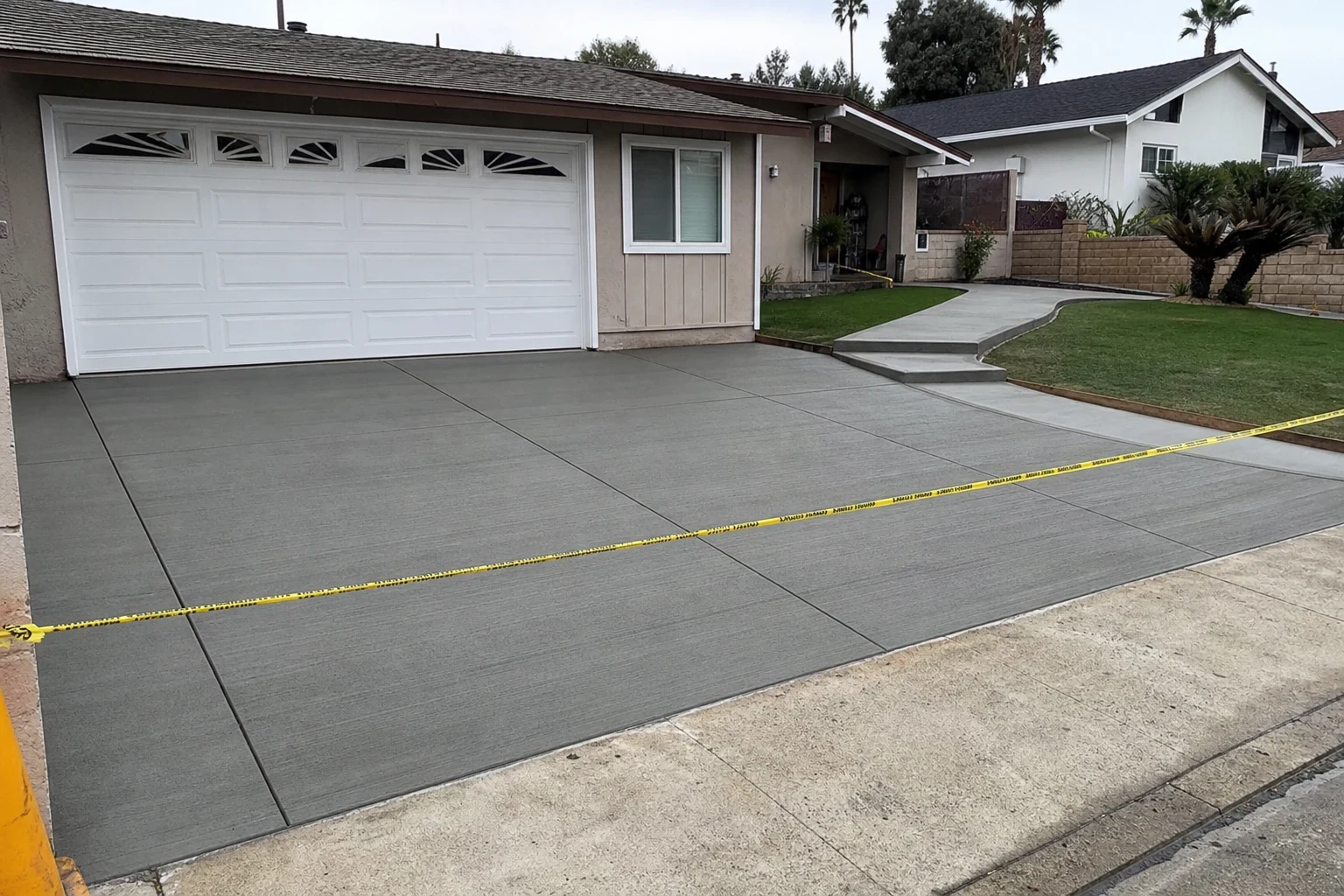
Broom, exposed aggregate, salt, colored or stamped. We can also match a new section to an existing driveway or patio finish as closely as the materials allow.
Cleanup and curing guidance
We clean the site, remove the forms once the concrete has set and tell you when it is safe to walk on and when it can handle heavier loads.
Signs it is time for a new walkway
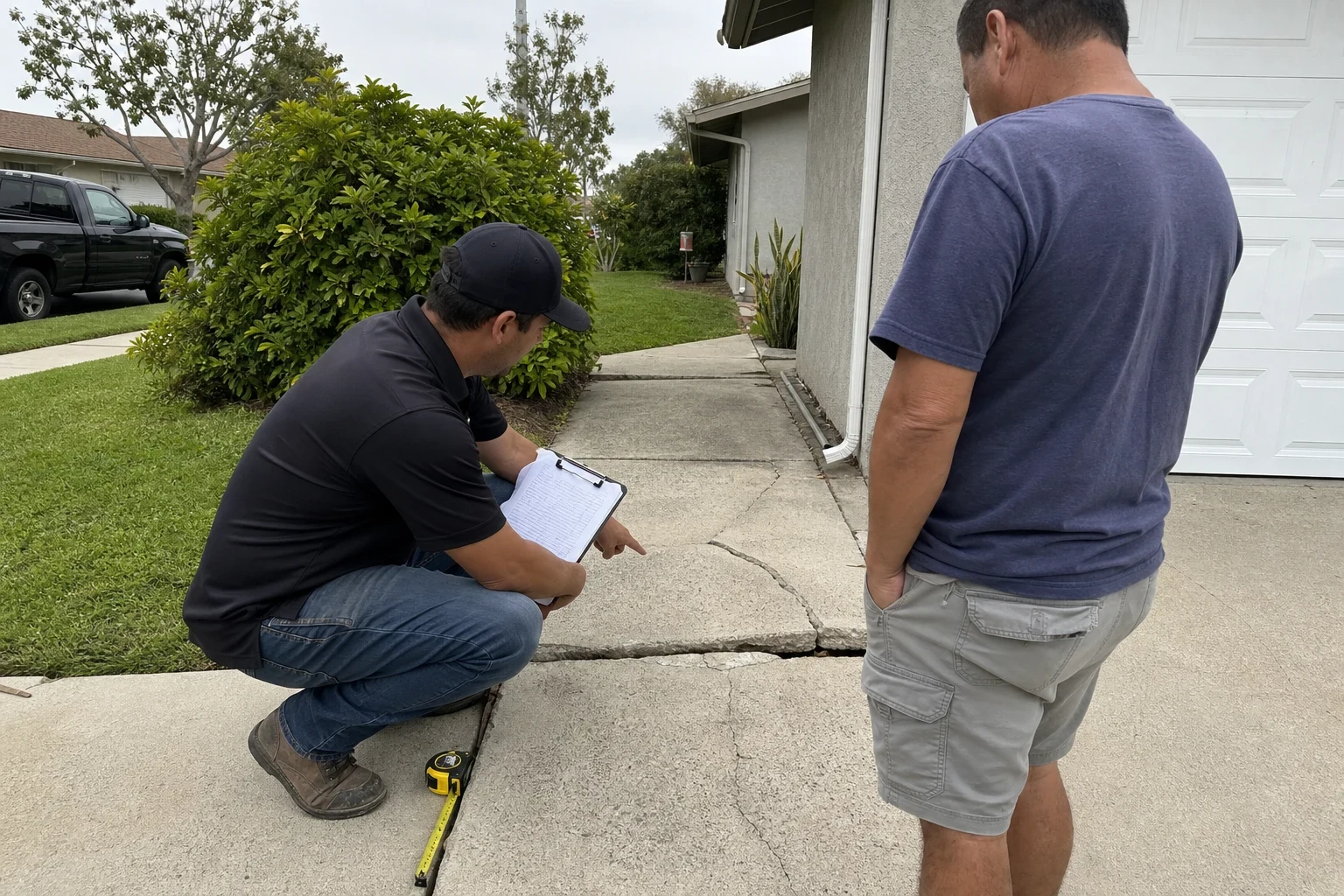
- Trip edges and heaved sections
- When slabs have lifted or dropped and left a lip, the path has become a tripping hazard. Replacing it with a properly based walkway puts everything back on one level.
- Water pooling near the house
- An old path that slopes the wrong way sends rain toward your foundation. A new pour lets us set the grade correctly.
- Worn, slick or crumbling surface
- Concrete that has lost its texture can get slippery when wet, and a flaking surface only gets worse. A fresh broom or salt finish brings back grip.
- Roots pushing through
- Tree roots under a narrow path can crack and tilt it. We can reroute the walkway or adjust the base and reinforcement where roots are a concern.
- No path where you actually walk
- If there is a worn line in the lawn or you are stepping through planters to reach the side gate, a new walkway is the practical fix.
How a walkway job runs
- 1
A phone call and a site visit
You share what you have in mind, and we come out to measure, check the soil and drainage, and show you finish samples in person.
- 2
A written estimate
Your line-item estimate spells out the length and width, base, reinforcement, finish and any removal, so nothing catches you off guard. If the job touches the public sidewalk, we let you know whether a city permit applies and pull it when required.
- 3
Prep and forming day
We clear out old material, grade and compact the base, then set the forms. You get to see the exact shape of the path before the concrete shows up.
- 4
Pour and finish
On a typical path, the truck arrives and the surface is finished before the day is out. We apply your chosen finish, cut the joints and cover nearby walls, plants and doors to keep splatter off them.
- 5
Curing and final look
Most paths can take careful footsteps within a day or two of the pour. After the forms come off, we stroll the finished walkway together and answer anything still on your mind.
What affects the cost of a walkway
Every walkway is priced from its own measurements and conditions. The biggest drivers are the size of the path, how much prep the ground needs and the finish you choose. Your written estimate lists each item on its own line, so you know exactly what you are paying for.
- Length, width and shape
- More square footage means more concrete and labor. Curves and steps take extra forming time compared with a straight run.
- Removal and site access
- Breaking out an old path adds labor and haul-away. A narrow side yard where we cannot bring equipment close also takes longer.
- Soil and base work
- On sloped lots or clay-heavy soil common across south Orange County, a deeper base or added reinforcement may be needed to keep the path stable.
- Finish choice
- A broom finish is the most economical. Exposed aggregate, color, salt and stamped finishes add materials and hand work, and stamped surfaces also need periodic sealing.
- Permits
- Work on your own property usually needs no permit, but sidewalk work in the public right-of-way often does, and that fee is part of the estimate.
Walkway and sidewalk questions
- Which finish is least slippery when wet?
- Exposed aggregate and a medium broom texture both hold up well for traction in the rain. A salt finish also grips nicely and feels comfortable under bare feet. Sealed stamped concrete can turn slick, so when you pick it we usually mix a non-slip additive into the sealer.
- Can you match my existing driveway or patio?
- We can come close. Fresh concrete shifts in color as it cures and weathers, so a new pour beside an older slab will look a bit different at first. We bring samples out so you can judge the match with your own eyes before you decide.
- How wide should a front walkway be?
- For a front entry path, many homeowners choose around four feet, which leaves room for two people side by side. A path to a side gate can be narrower. We mark the outline on site so you can see the width before any forms go in.
- Do I need a permit for a new sidewalk?
- A walkway that stays on your own lot usually needs none. Replacing the public sidewalk along the street generally calls for a city encroachment permit. We look into what applies at your address and take care of the permit when one is needed.
- Who stands behind the work once it is poured?
- We do, and you call the same crew that built it. The California State License Board (CSLB) licenses our company. We have been in business 15+ years, and every new walkway we pour is covered by our 1-year warranty.
Ready for a path that feels solid underfoot?
Tell us where you want to walk and what look you like. We will talk through finishes and set up a time to measure.