ServicesSide Yards
Concrete Side Yards in Laguna Niguel
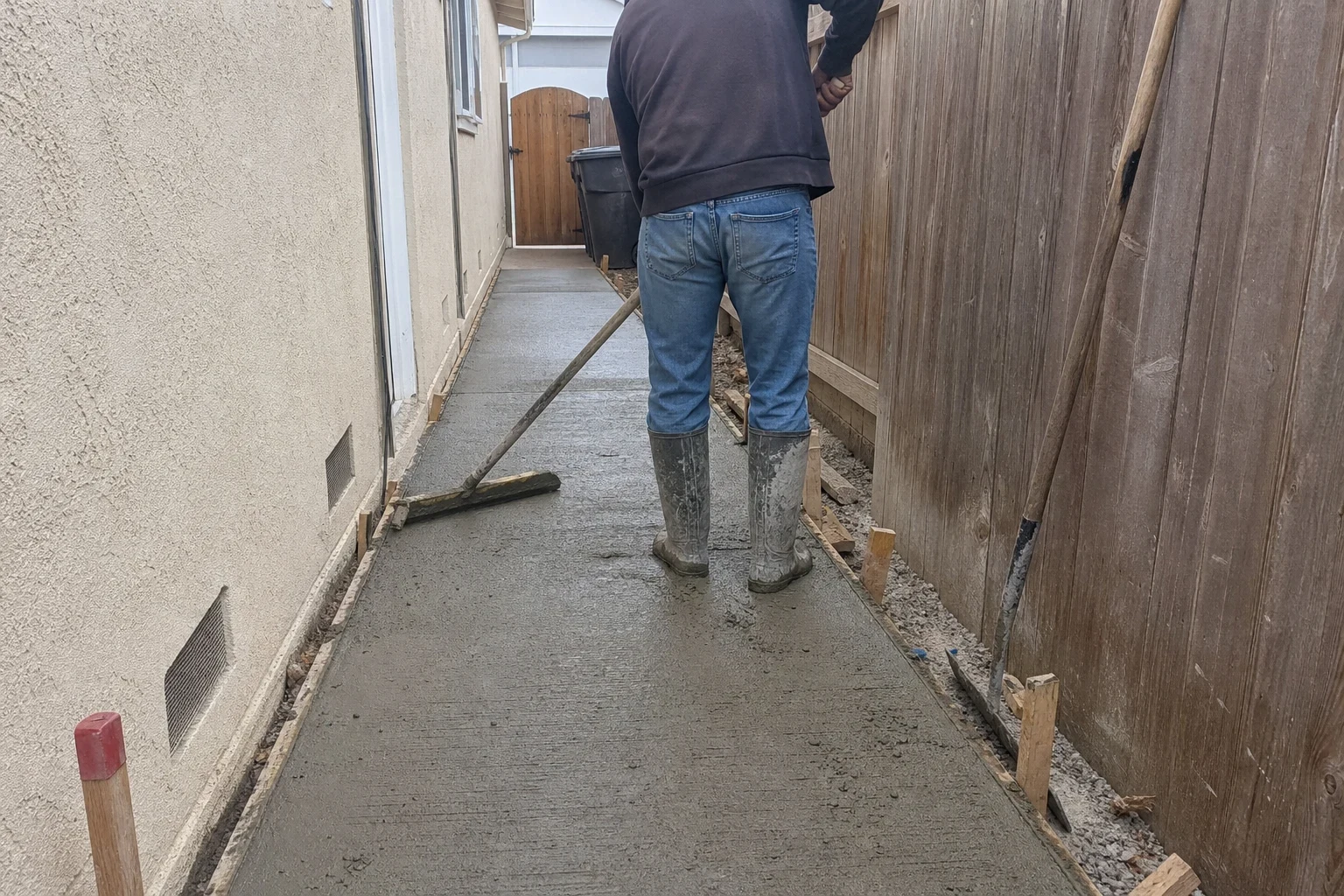
We pour concrete side yards that give you a firm, clean path from the front gate to the backyard. Each one is sloped so water moves away from your home, set below the stucco line and finished for how you actually use the space.
A narrow space that does a lot of work
The side yard is where the trash bins live, where the AC unit sits and where you roll the mower to the back. It is also where roof water lands and where dirt or gravel turns soft after a rain. A concrete side yard fixes the footing and controls the water in the same pour.
Side yards are tight, so the planning matters more than on a wide open slab. We look at downspouts, the gas meter, hose bibs, gate swings and the bottom edge of your stucco before we set a single form. On many homes across the area, those details decide whether the new concrete helps the house or sends water toward it.
We also walk you through finish options so you pick one that fits the space. A side yard rarely needs the most decorative surface, but it does need to stay grippy when wet and easy to sweep.
What your side yard project includes
Removal and grading
We dig out old gravel, failing pavers or dirt and grade the base to the right depth. Spoils leave in wheelbarrows or a small loader, depending on gate width.
Drainage built into the slope
The slab is pitched away from the foundation and toward the street or an area drain. Where downspouts empty into the side yard, we can tie in drain inlets or a trench drain so water has somewhere to go.
Clearance at the stucco
Along the base of a typical stucco wall runs a thin metal strip, the weep screed, and it should never end up buried. We keep the top of the new slab lower than that strip so the wall can dry out rather than hold moisture.
Reinforcement and control joints
We place rebar or wire as the soil calls for and cut joints at close spacing. Narrow slabs crack on their own schedule if you let them, so we decide where the lines go.
Work around utilities
Gas meters, AC pads and irrigation lines get formed around or adjusted with care. We point out anything that should be moved before the pour rather than after.
Your choice of finish
Broom, salt, exposed aggregate, color or stamped. We explain how each one handles foot traffic, rolling bins and shade so you choose with clear eyes.
Signs your side yard is ready for concrete
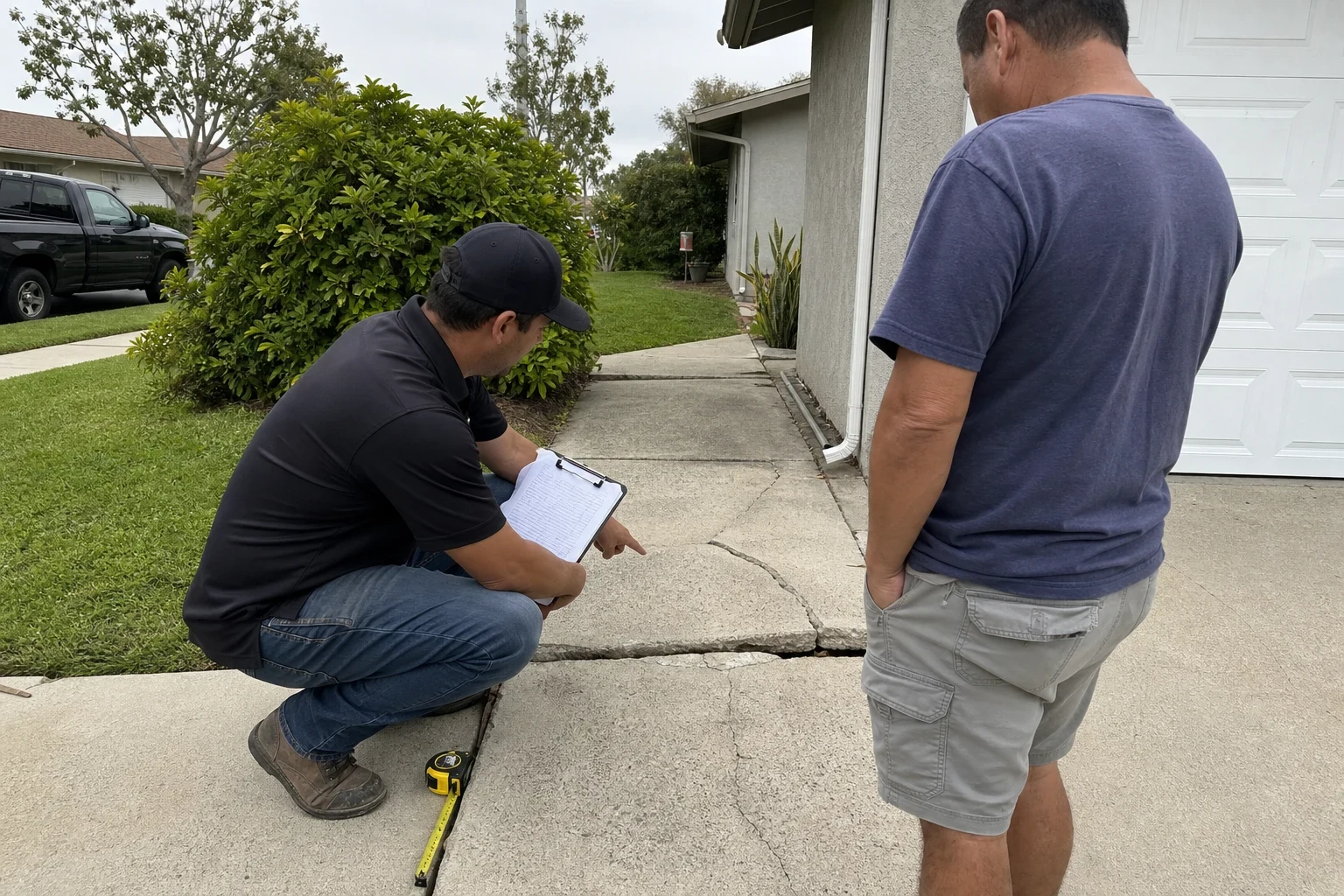
- Mud after every rain
- If the walk to the back gate turns soft and tracks dirt into the garage, the ground is holding water against your home.
- Gravel that keeps spreading
- Gravel drifts, sinks and grows weeds through the fabric. Bins tip and wheels dig in.
- Water pooling by the wall
- Puddles along the foundation or a damp line on the stucco mean the grade is running the wrong way. That is worth fixing before it shows up indoors.
- Pavers that rocked loose
- Old pavers or stepping stones that heaved or sank make a trip hazard in a space you use in the dark to take out the trash.
- No clear path for equipment
- If moving a mower, a wheelbarrow or pool supplies through the side yard is a struggle, a flat, even slab changes that.
How a side yard pour goes
- 1
Walk the space with you
We measure, check the slope with a level, note downspouts and utilities and talk about finishes. Afterward you receive an itemized estimate in writing, with demolition, drainage and finish shown as separate lines.
- 2
Base and forms
We remove the old surface, compact the base and set forms to the drainage slope. Any drains and reinforcement go in now, and we confirm the height against the weep screed.
- 3
Pour and finish
Concrete comes in by wheelbarrow or pump line when trucks cannot reach. We finish it, cut the joints and leave the area roped off and clean.
- 4
Cure and handoff
You can usually walk on it after a day or two and roll bins after about a week. We go over care, and your side yard is backed by our 1-year warranty.
What shapes the price of a side yard
Side yards are usually modest in square footage, so access and drainage often move the price more than size does. We spell out each item in the estimate so you can see where the money goes. If a choice can save you money without hurting the result, we say so.
- Access and delivery
- A narrow gate or a long carry from the street can mean pumping the concrete or moving it by hand. Either adds labor.
- What comes out first
- Removing old concrete, pavers or a deep layer of gravel takes time and haul-away. Clean dirt is quicker.
- Drainage work
- Area drains, trench drains and downspout tie-ins add materials and digging, and they are often the best money spent in a side yard.
- Finish choice
- A broom finish is the most economical. Exposed aggregate, integral color and stamped concrete cost more in material and finishing time.
- Grade changes
- Lots that slope along the side of the house may need a step, a curb or extra base to keep the slab level and draining right.
Side yard questions we hear
- Which finish works best for a side yard?
- For most homes, a medium broom finish is the practical pick. It grips when wet, sweeps easily and costs the least. Exposed aggregate looks richer and hides dirt well but is a little rougher underfoot. Stamped concrete can match a patio, though it can get slick in shady spots unless it is sealed with a grit additive.
- Will the concrete send water toward my house?
- Not when it is graded properly. We slope the slab away from the foundation and toward a drain or the street, and we check the fall before the pour. If downspouts empty into the side yard, we plan where that water goes.
- Does the AC unit or gas meter have to be moved?
- Usually not. We build the forms to wrap around both and leave the open space each one needs for service. If the AC sits on an old pad that has sunk or tipped, we point it out so you can decide whether to have it reset before we pour.
- What credentials does your company hold?
- Our company is licensed by the California State License Board (CSLB). We have been in business 15+ years, and side yards are a regular part of the flatwork we pour for homes like yours.
- How long will I lose access to the side of the house?
- Expect the space to be tied up for a few days from demolition through the pour. After that, light foot traffic is fine in a day or two. We help you plan ahead so bins and pets have another route in the meantime.
- Can the side yard match my patio or walkway?
- Often, yes. We can match color, aggregate or stamp pattern to an existing patio or to new walkways and sidewalks. Exact matches to older concrete are never perfect, and we will show you samples so you know what to expect.
Ready for a side yard you can actually use
Tell us about the space, the drainage and how you get through it now. We will talk through finishes and what the job involves so you know what you are choosing.