ServicesRV Parking Pads
Concrete RV Parking Pads in Laguna Niguel
An RV parked on dirt or a standard driveway slab sinks, ruts and cracks. We build pads to carry the real weight of your coach, trailer or boat, and we explain the slab thickness, steel and base before any concrete is ordered.
A Slab Built for the Weight It Will Carry
A loaded travel trailer can top 8,000 pounds, and a motorhome can weigh far more, with most of that load sitting on a few tire contact patches. A typical 4-inch patio slab was never meant for that. An RV pad needs more thickness, more steel and a firmer base, and the choices you make there decide whether the pad stays flat for decades or starts cracking at the wheel lines.
Our job is to lay those options out plainly. We tell you what your rig weighs on the slab, what thickness and reinforcement match it, and where spending more actually helps. Many lots in south Orange County sit on clay soil that swells when wet and shrinks in the dry months, so the base under the concrete matters as much as the concrete itself.
We have been pouring concrete here for 15+ years, and our pads are often tied into a new or widened driveway or a side yard that leads back to the parking spot.
What Goes Into Your RV Pad
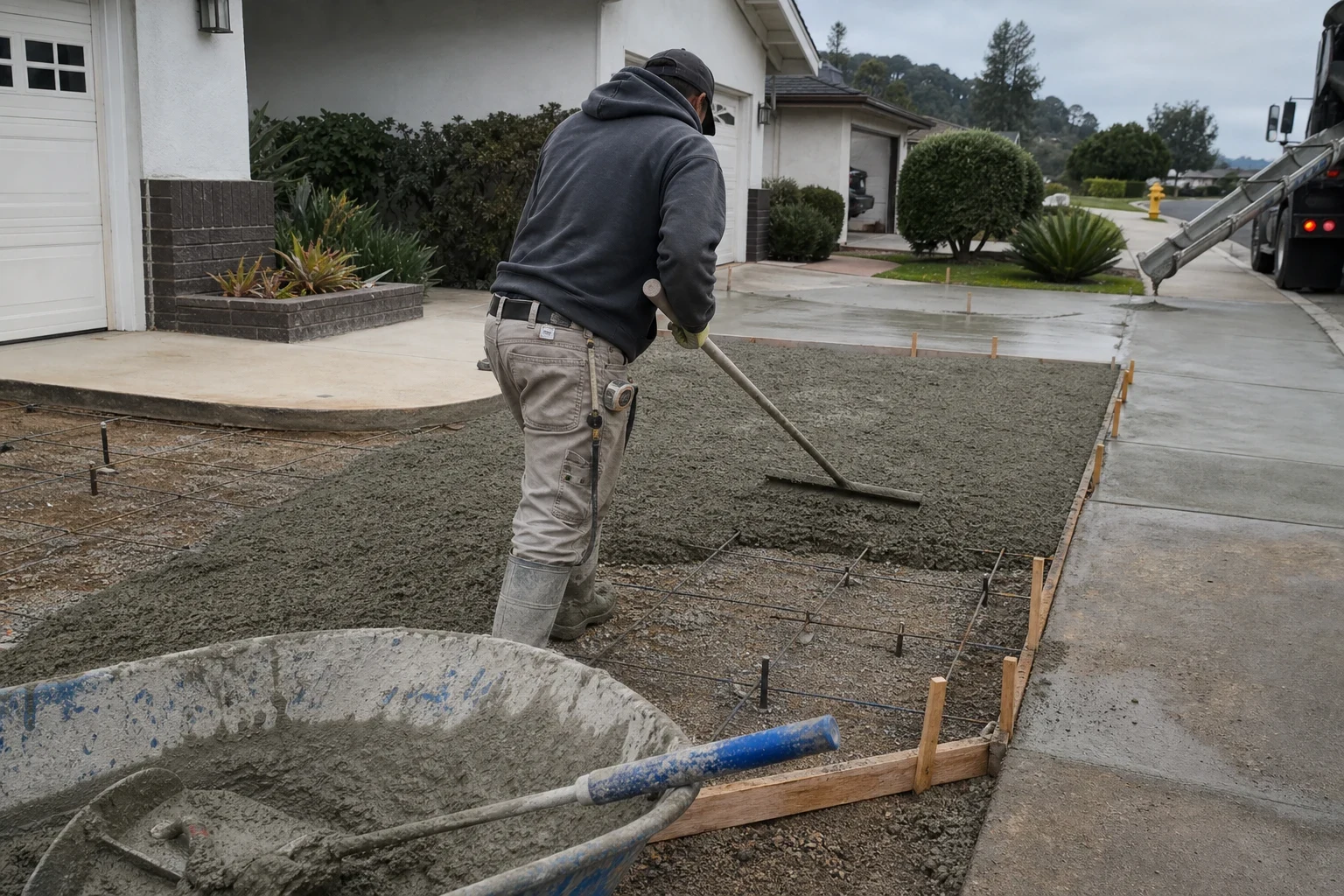
- Excavation and compacted base
- We dig out soft soil and organic material, then place and compact crushed aggregate base in lifts. A firm, even base is what keeps a heavy slab from settling unevenly.
- Slab thickness sized to your rig
- Most RV pads call for 5 to 6 inches of concrete, and heavier motorhomes may need more. We size it to what you park, not to a one-size number.
- Rebar or wire mesh, explained
- Rebar on chairs gives the most strength for heavy point loads. Welded wire mesh costs less and suits lighter trailers. Fiber added to the mix helps control surface cracking but does not replace steel, and we will tell you which combination fits your pad.
- Higher-strength mix
- We typically order a stronger concrete mix for RV pads than for walkways, which holds up better under tire loads and repeated turning.
- Control joints and drainage slope
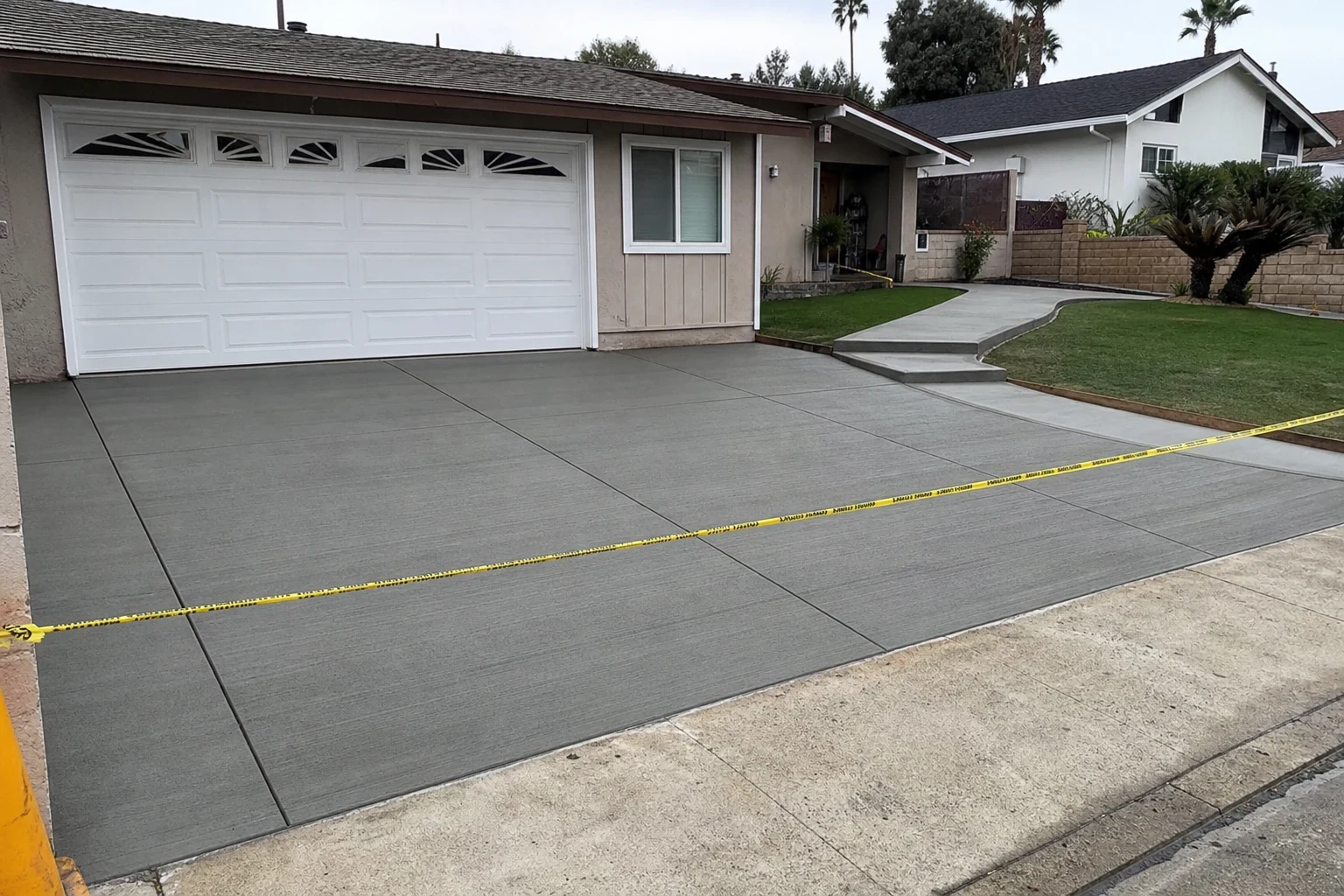
- Joints are cut where the slab is most likely to crack, so any cracking stays straight and hidden in the joint. The pad is sloped so water runs away from your home and your rig.
- Broom finish for traction
- A broom finish gives tires and shoes grip, even when the pad is wet from washing the coach.
When Your RV Needs Its Own Pad
Grooves where the tires sit
Tire tracks sinking into gravel or soil, or a trailer tongue that drops a little lower each year, tell you the ground cannot hold the load.
Driveway cracks in the wheel path
Long breaks that trace where the tires roll usually point to a slab that was poured too thin for an RV.
Blocks and chocks before every trip
If you have to level the rig each time you load up, and the fridge acts up when it sits off level, a flat pad fixes both.
Mud and weeds under the coach
Winter rain turns bare ground into mud that ends up inside, and weeds creep up toward the undercarriage. A concrete surface stays clean and rinses off with a hose.
A rig arriving soon
Pouring the pad ahead of delivery gives your new RV firm footing on day one, and lets us plan the route in from the street at the same time.
How Your RV Pad Job Runs
- 1
Talk it through by phone
Tell us what you park, its rough weight and where you want it. We discuss materials and options so you know what to expect before we visit.
- 2
Site visit and written estimate
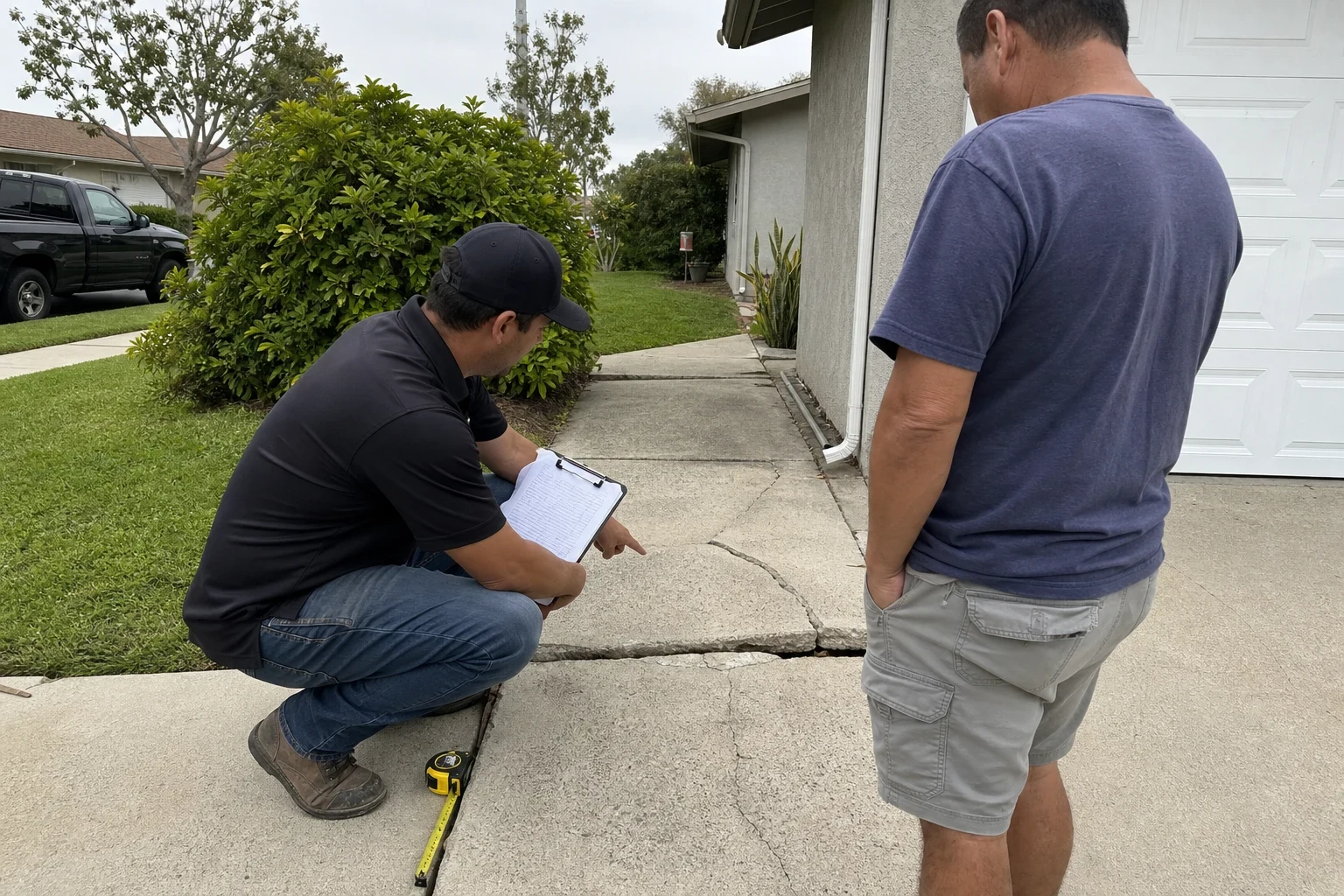
We look at the soil, the slope, access from the street and any gate or side yard the rig must pass through. You get a written estimate that lists thickness, reinforcement and base so you can compare clearly.
- 3
Approvals and prep
If your HOA or the city needs to sign off, or a curb cut is involved, we walk you through what is required. Then we excavate, compact the base and set forms and steel.
- 4
Pour and finish
We pour, screed, broom-finish and cut control joints. Your yard and landscaping are protected during the work and the site is cleaned up when we leave.
- 5
Cure before parking
Foot traffic is fine after a day or two. We ask you to wait about a week for a car and closer to a month before parking a heavy RV, so the slab reaches its strength.
What Moves the Price of an RV Pad
Pricing depends on how big and how heavy-duty the pad needs to be, and on what we find under the surface. We itemize each part so you can see where the money goes and adjust options if you want to.
- Size and thickness
- A longer pad for a big motorhome, or a thicker slab for a heavy rig, takes more concrete and more labor.
- Reinforcement choice
- Rebar costs more than wire mesh but carries heavy loads better. We will show you the difference in your estimate.
- Soil and grading
- Expansive clay, a sloped lot or old fill may need deeper excavation, extra base or a short retaining edge.
- Access for equipment
- Narrow side yards or no way for a concrete truck to reach the spot can mean pumping or wheelbarrowing the mix.
- Permits and curb work
- Widening a driveway approach or cutting a curb adds permit and city requirements that affect cost.
RV Parking Pad Questions
Something not covered here? (949) 832-1518
How thick should my RV pad be?
Most travel trailers and fifth wheels do well on 5 to 6 inches of concrete with steel reinforcement over a compacted base. A large Class A motorhome may need a thicker slab. We settle on the number once we know what your rig weighs.
Can you just extend my existing driveway?
In many cases, yes. We typically pour the new section thicker than the driveway and connect the two with dowels so they move as one. If the driveway itself is worn out, our Driveways page explains that work.
Do I need HOA or city approval?
Plenty of neighborhoods have HOA rules about where an RV can sit, and a curb cut or new driveway approach usually needs a city permit. We tell you what commonly applies and pull the permit when the job calls for one. It still helps to read your HOA rules before we start.
Will the pad crack?
As fresh concrete dries it pulls in slightly, so a few hairline cracks are expected with any slab. We cut joints so those cracks form in straight, tidy lines where you barely notice them. A firm base and the right steel are what stop the pad from breaking apart under your rig's weight.
What credentials and coverage come with the work?
Our company holds a license from the California State License Board (CSLB), and every RV pad we pour carries a 1-year warranty. Before work begins, we explain what the warranty covers so nothing is a surprise later.
Give Your RV a Level Place to Park
Tell us about your rig and your lot, and we will walk you through the slab, steel and base options that fit. Get your quote by phone.