ServicesStamped Concrete
Stamped Concrete in Laguna Niguel
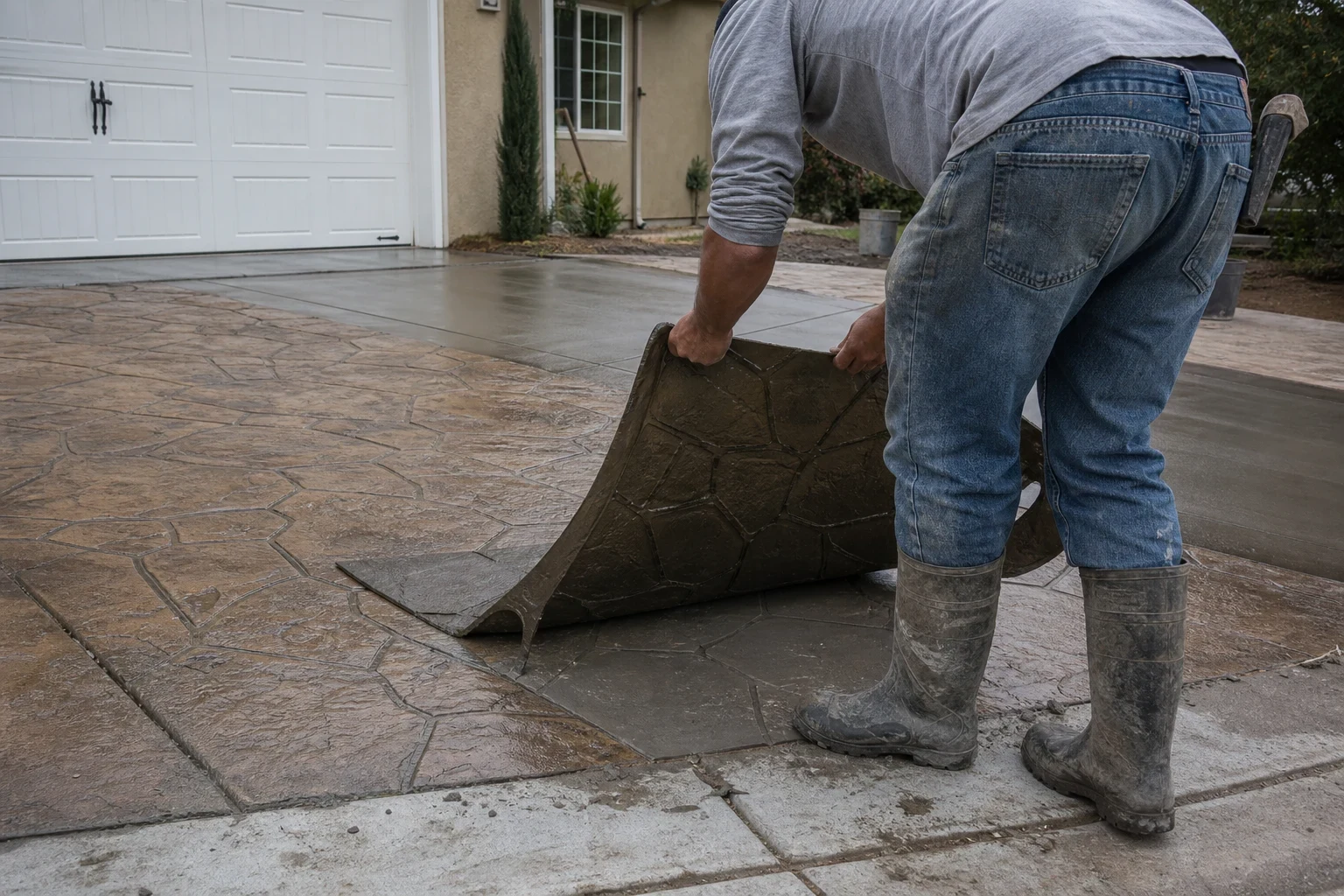
We pour new concrete and press it into slate, flagstone, cobble or wood plank textures while it is still workable. Before the pour, we show you how each color method and sealer behaves, so the finish you pick is one you will still like years from now.
What stamped concrete is and when it fits
Stamped concrete starts as a regular reinforced slab. While the surface is still plastic, we color it and press textured mats into it, so the finished piece reads as stone, brick or plank. It works well on patios, pool decks, walkways, courtyards and driveways where you want a decorative look that stays one solid surface.
The decisions that shape the result happen before the truck shows up: how the color goes in, which release agent creates the accent tones, and which sealer protects it. We bring samples and explain each option in plain terms. Our company holds its license from the California State License Board (CSLB), and across 15+ years in business we have sat down with a lot of homeowners to lay these choices out next to each other.
If you would rather have individual units you can lift and reset, stamped concrete may not be your best match, and we will tell you so. If you want one continuous surface with no gaps for weeds or ants, it is a strong choice.
What goes into a stamped concrete job
- Integral color or color hardener
- Integral color is mixed through the whole load, so a chip shows the same tone instead of gray. Broadcast color hardener is troweled into the top layer, giving brighter color and a denser, more wear-resistant surface. We show you both on samples so you can see the difference in person.
- Release agent for depth
- A powdered release in a darker shade settles into the grout lines and texture, giving an antiqued, two-tone look. Liquid release keeps the base color clean, which suits a single-tone finish or a later stain.
- Pattern and texture mats
- Ashlar slate, random flagstone, cobble and wood plank are the most requested. Texture-only skins add stone grain without grout lines, for a quieter look around busy planting.
- A solid foundation under the pattern
- The pretty surface only lasts if what sits below it is sound. Soil is shaped and packed tight first, and the steel goes in next, either rebar or wire mesh depending on whether the area carries people or vehicles. Fiber added to the mix helps limit fine surface cracks while it cures.
- Joints hidden in the pattern
- Control joints are cut along grout lines where possible, so the cuts that guide cracking blend into the design instead of slicing across a stone.
- Sealer matched to the space
- Solvent-based acrylic deepens color with a wet look. Water-based sealer has less odor and a more natural finish. Near pools and steps we add a grit additive for better footing.
Signs stamped concrete is a good fit for your home
Plain gray looks unfinished
If a bare slab feels out of place beside stucco, tile roofs and planted beds, color and texture help the outdoor space match your home.
You want stone without loose units
Stamped concrete gives a stone look with no sand joints to wash out, sprout weeds or shift underfoot.
You are tying several areas together
Planning a new patio, pool deck and walkway at once is a good time to carry one pattern and color through all of them.
Your HOA has an approved palette
Many communities set color guidelines. We can match a stamp color and release tone to the sample your association approves before anything is poured.
You entertain outdoors often
A sealed, decorative surface is easy to rinse after a gathering and holds up to furniture, grills and foot traffic.
What affects the price of stamped concrete
Stamped work costs more than a plain broom finish because of the added color, the mats and the hand labor during a short stamping window. Your quote depends on a handful of choices and site conditions. We walk you through each line so you know where the money goes.
Pattern and number of colors
A single color with one texture is simpler than a two-tone ashlar with a contrasting border. Each added color or accent adds material and time.
Color method
Color hardener and integral color are priced differently, and the amount needed changes with the depth of tone you want.
Size, shape and access
Larger open areas stamp more efficiently than narrow strips, curves and steps. Tight side yards that need a pump or wheelbarrows add labor.
Removal and base work
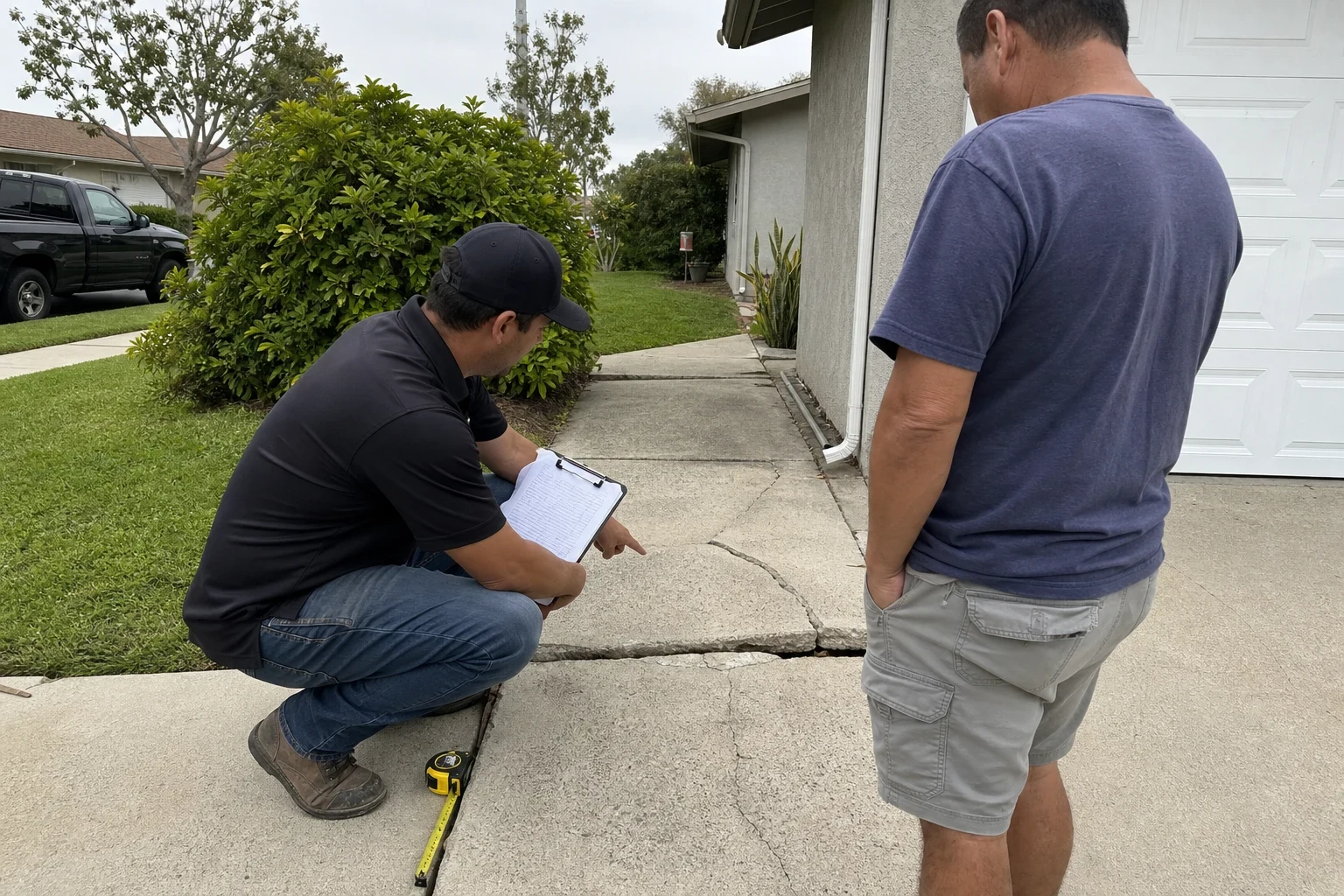
Tearing out an old slab, hauling it away and correcting soft or uneven ground all happen before the pour and show up as separate items.
Sealer and slip additive
Solvent and water-based sealers differ in cost, and areas near water usually need a grit additive mixed in.
How your stamped concrete gets built
- 1
Choose pattern, color and sealer
We start on the phone, then meet at your home with samples. You see integral color next to hardener, and powdered release next to liquid, in real daylight.
- 2
Layout, removal and base
We mark the area, remove old concrete or soil as needed, compact the base, and set forms and reinforcement. We check slope so water runs away from your home.
- 3
Pour and color
The concrete is placed and leveled. If you chose color hardener, we broadcast and float it into the surface while it is still workable.
- 4
Stamp at the right moment
Timing matters most here. We apply release and press the mats when the surface will hold crisp texture without tearing, then detail edges and steps by hand.
- 5
Wash, cut and seal
After the slab sets, we wash off excess release, cut control joints and apply the sealer. You get care instructions and a clear idea of when to walk, set furniture or drive on it.
Stamped concrete questions
Is stamped concrete slippery around a pool?
Sealed concrete can get slick when wet, so we choose textures with more grain for pool decks and add a grit additive to the sealer. A lighter color also stays cooler under bare feet. We will show you how a textured, slip-treated sample feels before you decide.
How often does it need to be resealed?
Most stamped surfaces look their best with a fresh coat of sealer every two to three years, sooner if the area gets full afternoon sun or heavy use. Resealing brings back the depth of color. We explain the signs to watch for, like water no longer beading.
Will the color fade in the sun?
All concrete color softens a little over time, especially under strong coastal sun. Color hardener and a good sealer hold up better than surface stain alone. Keeping the sealer fresh protects the color more than anything else.
Will my stamped concrete crack?
Concrete shrinks as it cures, and some hairline cracking is normal. We use a compacted base, reinforcement and control joints placed in the pattern lines so cracks follow planned paths. Our work comes with a 1-year warranty, and we explain what it covers when we go over your quote.
How soon can we use it?
Plan on staying off it for the first 24 to 48 hours, then walking on it normally. Patio furniture and the grill should wait roughly seven days, and a stamped driveway needs more time still before a car rolls onto it. Cool or humid weather slows the cure, so we confirm the timing for your pour.
Ready to pick your pattern and color?
Tell us about the space and the look you have in mind. We will talk through color methods and sealers, then set a time to bring samples to your home.