ServicesConcrete Slabs
Concrete Slabs in Laguna Niguel
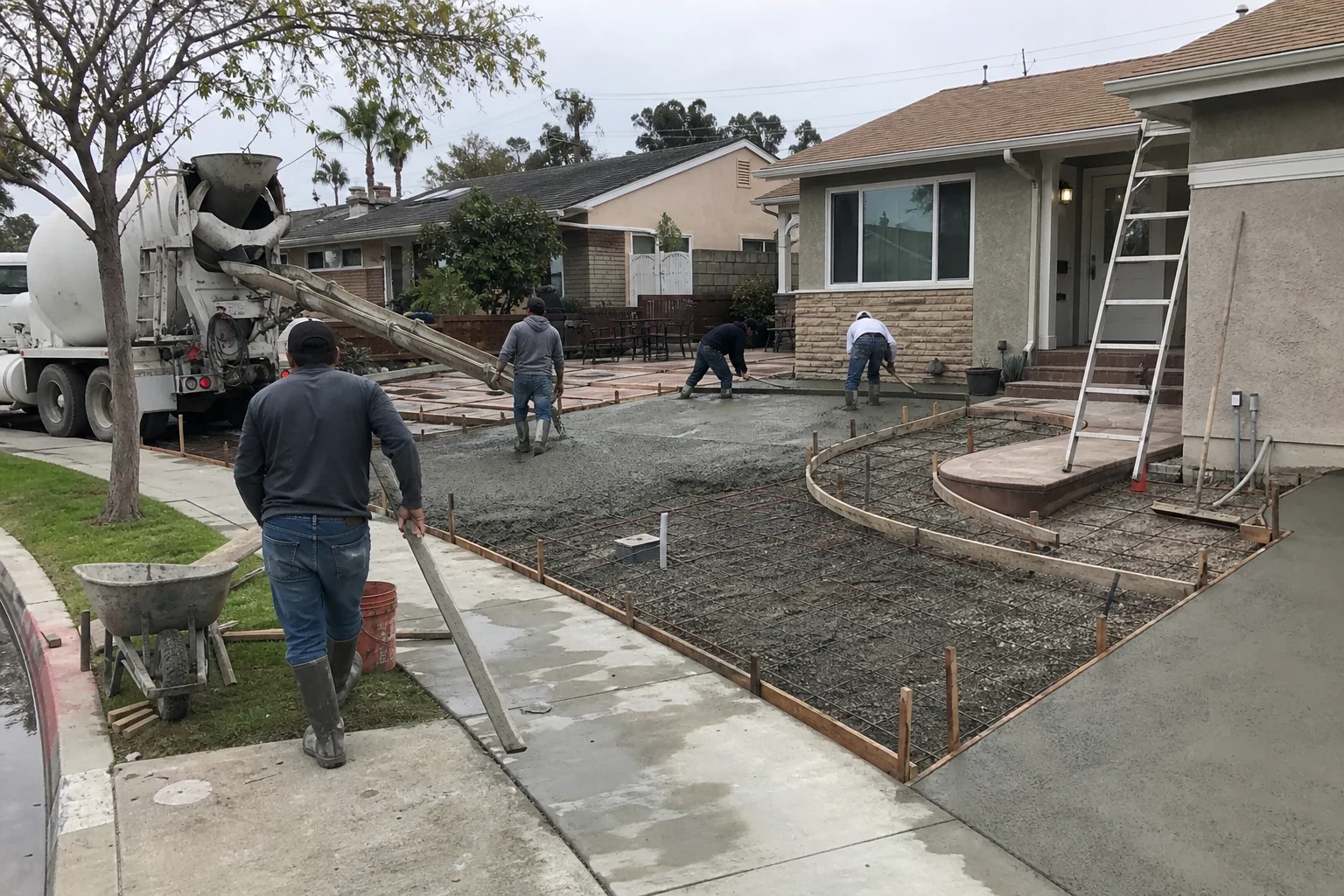
We pour concrete slabs for sheds, hot tubs, AC units, generators and small workshops at your home. Before we pour, we explain the mix, thickness and reinforcement options in plain terms, so you know what is going under your equipment and why.
A slab sized and built for its job
A slab looks simple. It is a flat rectangle of concrete. What makes one last is the part you never see: a compacted gravel base, the right thickness for the load and reinforcement that holds the concrete together if the ground moves a little.
A pad for a plastic shed and a pad for a filled six-person spa carry very different weight. We ask what is going on the slab, then walk you through the material choices that fit it. A 4-inch slab with wire mesh suits light storage. Heavier loads usually call for 5 or 6 inches with rebar on a grid.
We have been pouring concrete for 15+ years, and we bring that experience to small pads as much as large ones. If the slab connects to other work, such as a new patio or a side yard path, we can plan it as one project.
What your slab work includes
- Layout and grade check
- We mark the footprint and check how water moves across that part of your yard. The finished slab gets a slight slope so rain runs off instead of pooling under your equipment.
- Excavation and compacted base
- We dig out soil and roots, then lay and compact crushed gravel. Many yards in south Orange County sit on clay that swells when wet, and a good base helps the slab ride through that movement.
- Reinforcement you choose with us
- Wire mesh, rebar or fiber-reinforced concrete each have a place. We explain the trade-offs in cost and strength, and we set steel on supports so it ends up inside the concrete, not lying on the dirt.
- Forms, pour and finish
- We set straight forms, pour, screed and finish the surface. A light broom finish gives grip outdoors. A smooth trowel finish works well under a workshop or storage area.
- Control joints and curing
- We cut or tool joints so any shrinkage cracks follow a straight line where you expect them. Then we cure the slab properly so it gains full strength.
- Cleanup
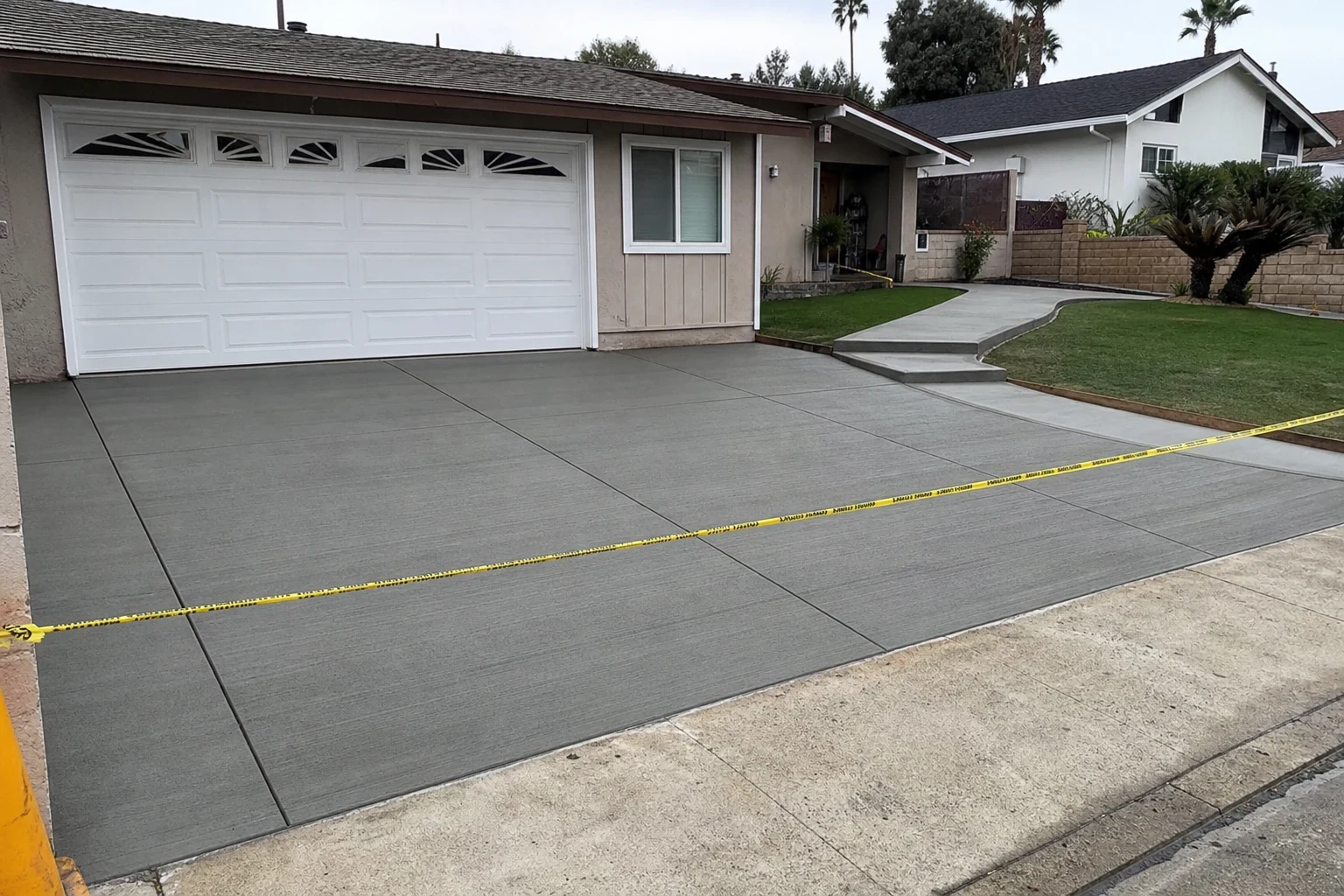
- Leftover forms, spoils and debris leave with us. You get a finished pad and a clean work area.
When a new slab is the right call
Equipment sits on dirt or pavers
Sheds, AC units and generators on soil or loose pavers tend to tilt over time. A poured slab gives them a level, stable footing.
You are adding a hot tub
A filled spa is heavy, and most manufacturers ask for a level, solid base. A properly reinforced slab meets that need.
A gravel pad keeps shifting
Gravel moves with every rain and every season. If you keep raking and releveling it, concrete ends the chore.
You want a usable work area
A slab turns a muddy corner into a spot for a workbench, bike storage or trash bins that stays clean and easy to sweep.
An old slab is past saving
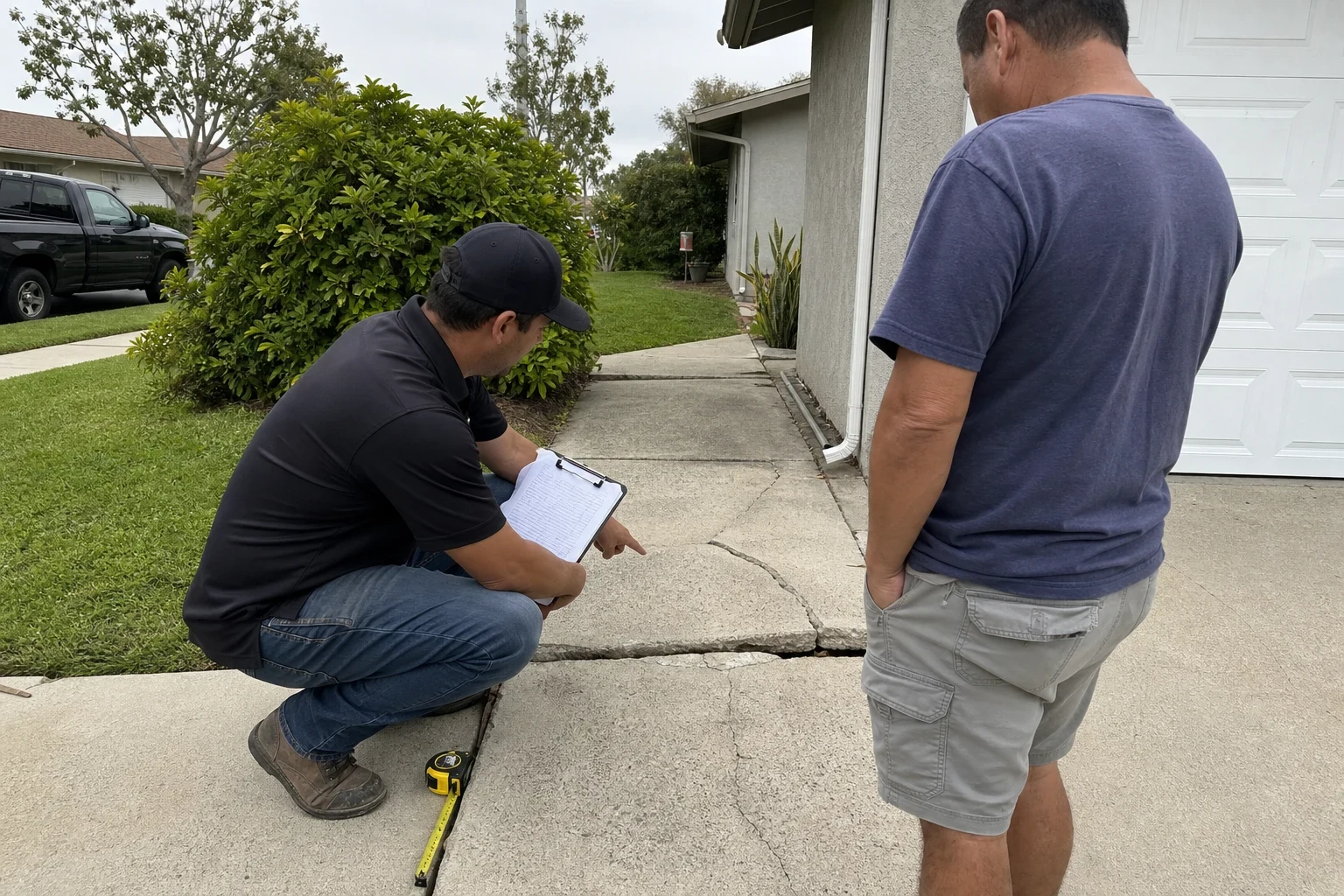
When a worn pad is heaved and broken through, removing it and pouring new on a fresh base is often the honest answer. We will tell you plainly what we see.
How a slab job runs
- 1
A call about what goes on it
Tell us the size, the location and what the slab will hold. We talk through mix, thickness and reinforcement options so you can compare them before anything is booked.
- 2
Site visit and written estimate
We look at access, soil and drainage, then give you a written estimate that lists the base, reinforcement and finish line by line.
- 3
Prep day
We excavate, compact the base, set forms and place the reinforcement. If a permit applies to your project, we take care of it before work starts.
- 4
Pour day
Most small and mid-size slabs are poured and finished in a single day. We protect nearby walls, plants and walkways while we work.
- 5
Curing and handoff
You can walk on the slab in a day or two. We let you know when it is ready for a shed, a spa or heavy equipment, which usually means waiting about a week or more.
What moves the price of a slab
The biggest drivers of slab cost are its footprint, its depth and how hard it is to get concrete to the spot. Each piece of the job shows up as its own line on our estimate, so you can compare options and decide which ones are worth it for you.
- Size and thickness
- More square footage and more depth both mean more concrete. A 6-inch slab uses half again as much as a 4-inch one.
- Reinforcement
- Wire mesh costs less than a rebar grid. Fiber in the mix adds a bit to the concrete price but saves some labor.
- Access to the site
- A pad by the driveway can be poured straight from the truck. A backyard spot behind the house may need a pump or wheelbarrows, which adds time.
- Removal and ground prep
- Tearing out an old pad, roots or extra soil adds labor and hauling. Sloped ground may need more base or a short form wall.
- Finish and permits
- A basic broom finish is the simplest. Smooth, colored or stamped finishes add cost, and so does any permit your project requires.
Concrete slab questions
Something not covered here? (949) 832-1518
How thick should my slab be?
For a light shed, AC unit or trash enclosure, 4 inches is usually enough. Hot tubs, workshops with heavy tools and anything with a lot of point load generally do better at 5 to 6 inches. We will recommend a thickness once we know what the slab is for.
Is rebar better than wire mesh?
Rebar is stronger and the better choice for heavy loads or clay soil that moves. Wire mesh is fine for lighter pads and costs less. Fiber-reinforced concrete helps control surface cracking, and we sometimes pair it with steel for extra strength.
Will my new slab crack?
As fresh concrete dries, it loses a little volume, and that can leave fine surface lines. Control joints give that movement a planned place to go, so any lines stay straight and tidy. A well-compacted base and careful curing do the rest of the work in keeping the slab sound.
Who stands behind the work once it is poured?
We do. Our company holds a license from the California State License Board (CSLB), and our slab work comes with a 1-year warranty. We are glad to explain what that covers when we talk.
Do you pour slabs outside Laguna Niguel?
We do. We also work in nearby towns such as Aliso Viejo, Mission Viejo, Dana Point and Laguna Hills. Our Service Areas page lists the full set.
Ready for a level, solid pad?
Tell us what the slab will hold and where it is going. We will talk you through the material options and set up a visit for a written estimate.