ServicesDriveways
Concrete Driveways in Laguna Niguel
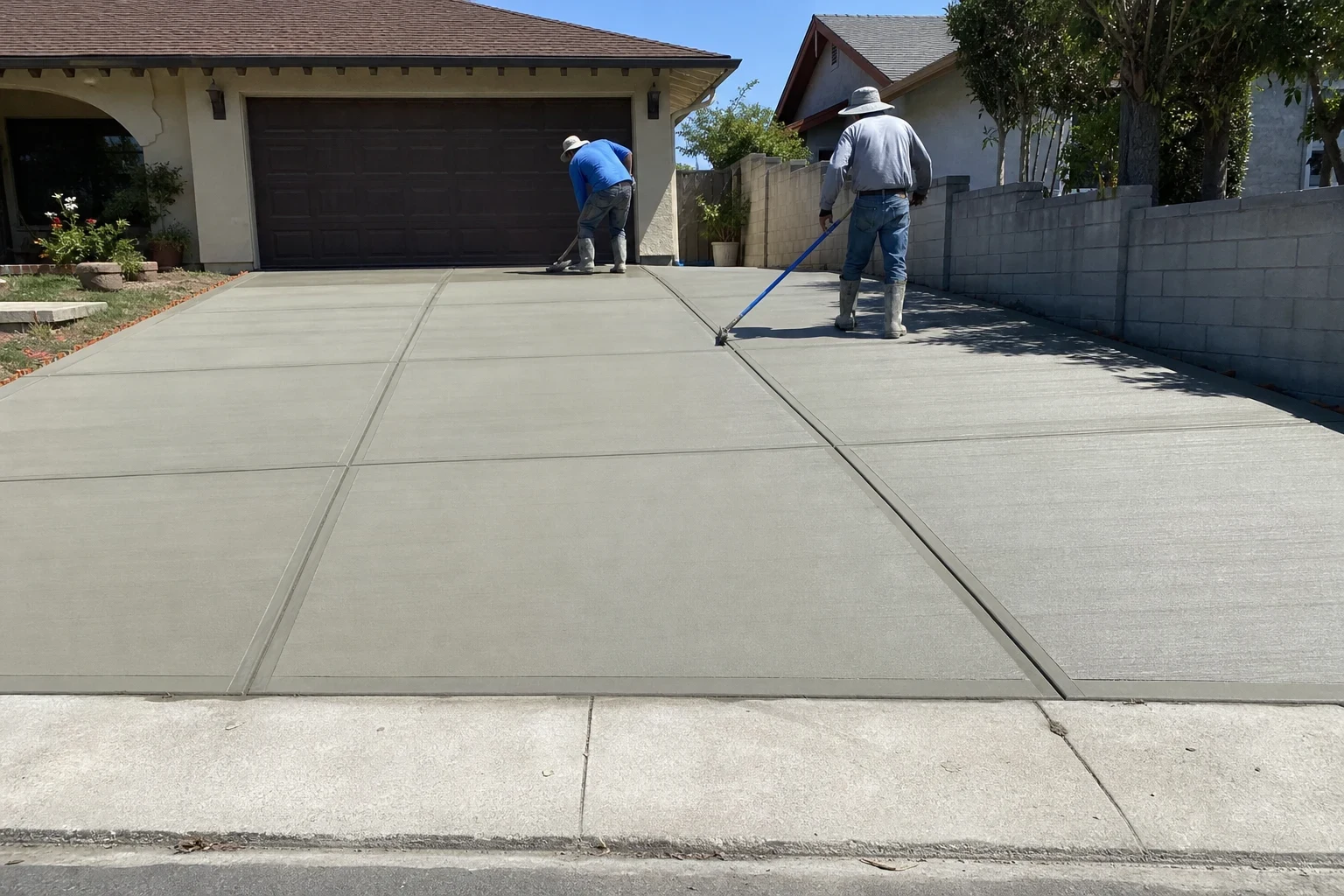
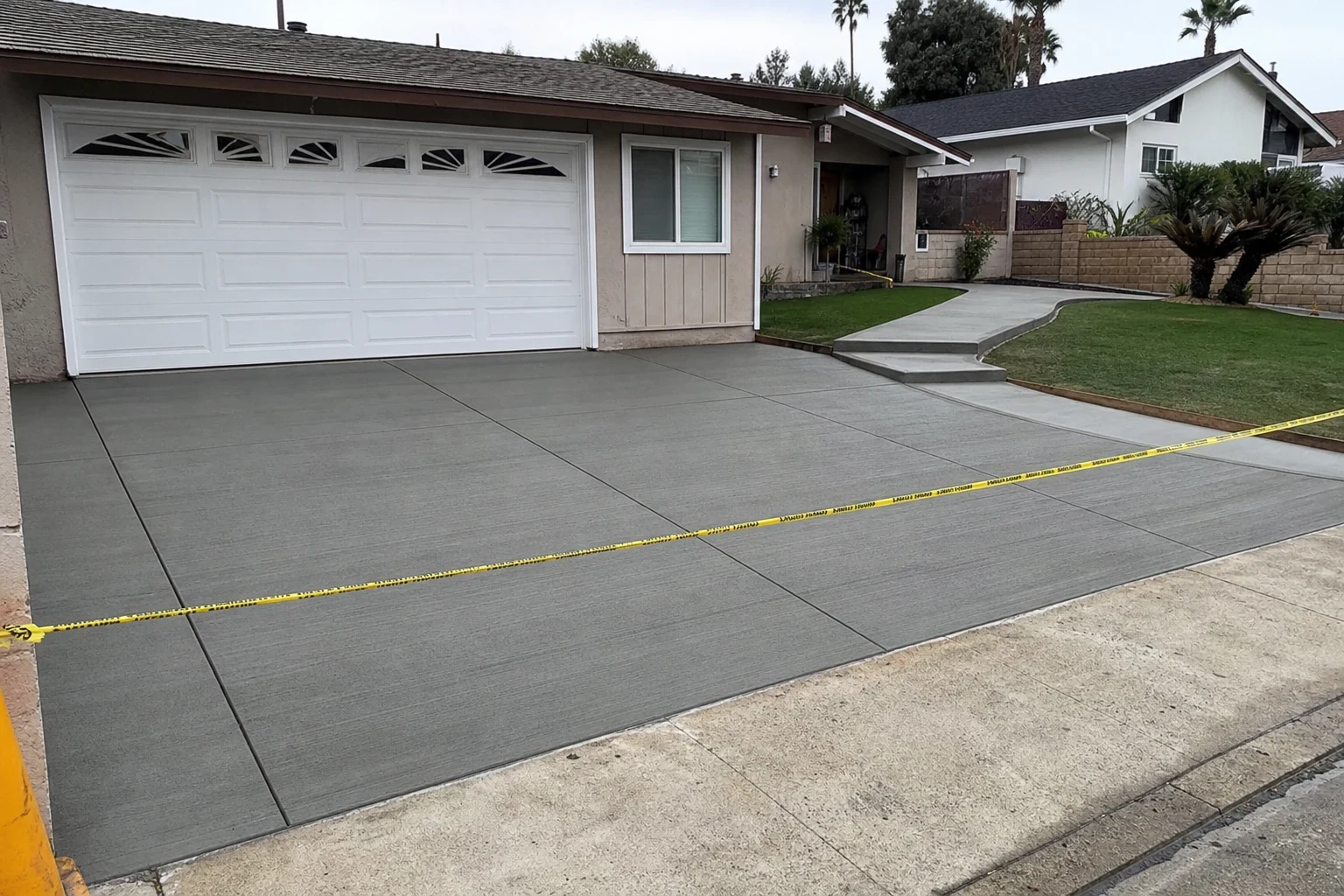
Your worn-out driveway comes up and a new slab goes in, built for daily parking, strong sun and the odd moving truck. Before a single yard of concrete is ordered, we sit down with you and go over mix, thickness, reinforcement and finish, so every line of the price makes sense.
A new driveway, planned from the ground up
A driveway carries more weight than any other concrete around your home, and most of what makes it last is hidden. The base under the slab, the thickness of the pour, the steel inside it and where the control joints go decide whether it stays flat and clean for decades or starts cracking in a few years.
Our company holds a license from the California State License Board (CSLB) and has been in business 15+ years, much of it spent on driveways. The way we work is simple: explain the material choices in plain terms, show you how each one looks and wears over time, and let you pick what fits your home and budget.
If you also want to update the front walk or entry, we can plan it alongside your driveway so the finish and color match. Our Walkways and Sidewalks and Stamped Concrete pages cover those options.
What your driveway job includes
- Removal and haul-away
- We break out the old concrete or asphalt and haul it off. You are not left with a debris pile on the curb.
- Base prep and compaction
- We grade and compact a layer of crushed rock under the new slab. Clay soil is common around south Orange County, and it swells and shrinks with moisture, so a firm base matters more here than most people expect.
- Reinforcement that fits the load
- Rebar on chairs or welded wire mesh, depending on your vehicles and soil. We explain why we recommend one over the other for your driveway.
- Your choice of finish
- A classic broom finish gives good grip and costs the least. Exposed aggregate shows the stone in the mix and hides tire marks well. Stamped and colored concrete adds pattern, with more upkeep since it needs resealing.
- Control joints and curing
- We cut joints at planned spacing so the slab cracks where we want it to, in a straight line, not across the middle. Then we cure the surface properly so it reaches full strength.
- Cleanup and a written warranty
- We clear the site when the pour is done, and your new driveway comes with our 1-year warranty.
Signs it is time for a new driveway
Cracks that keep spreading
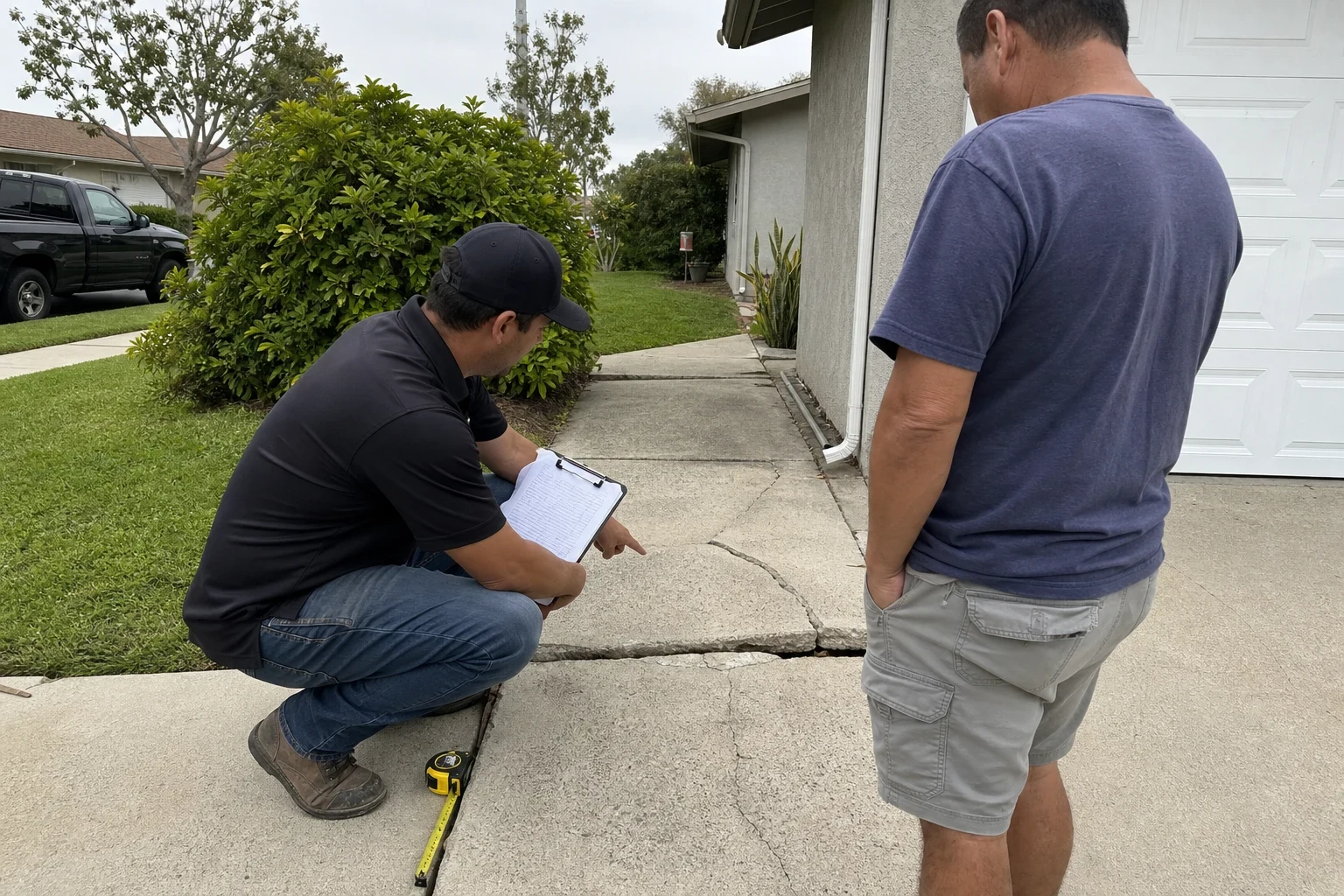
A hairline crack is normal. Wide cracks that grow each year, or sections that have shifted so one side sits higher, usually mean the base underneath has failed.
Sunken or tilted slabs
When a panel drops near the garage or the street, water collects and the problem speeds up. Replacing the slab with a better base fixes the cause, not just the surface.
Crumbling or flaking surface
Scaling and loose grit often come from a weak original mix or poor curing. Patching a surface like that rarely holds.
Roots lifting the concrete
Tree roots can push slabs up and create trip edges. We can discuss root barriers and adjusted layouts when we pour new.
It simply no longer fits
Maybe you need it wider for a second car or want a finish that suits your home better. A new driveway is a good time to change the shape too.
What affects the cost of a driveway
Every driveway is priced on its own measurements and conditions. The biggest swings come from size, what has to come out first and which finish you choose. We go through each line with you so you can see where the money goes and adjust if needed.
Size and thickness
Square footage drives most of the material cost. Heavier vehicles, like a truck or work van, may call for a thicker slab.
Removal and access
Thick old concrete, a narrow side approach or a steep slope can add labor time for demolition and prep.
Finish and color
Broom finish is the most economical. Exposed aggregate, integral color and stamped patterns each add material and labor.
Soil and base work
Soft or expansive soil may need extra excavation and more rock to give the slab a stable footing.
Permits and approach work
Replacing the apron at the street often involves city requirements that add a permit and inspection step.
How your driveway project runs
- 1
Phone conversation and site visit
You tell us what is bothering you about the current driveway. We come out, measure, check drainage and slope, and look at access for the trucks.
- 2
Material walkthrough and written estimate
We lay out the finish options, thickness and reinforcement with the trade-offs of each. You get a written, line-item estimate so nothing is a surprise.
- 3
Permits and scheduling
If your project touches the approach or sidewalk in the public right-of-way, a city permit is usually needed, and we handle that paperwork. Then we set a pour date around the weather.
- 4
Demo, prep and pour
Removal and base work typically take a day or two. On pour day we place, finish and cut joints while the concrete is at the right stage.
- 5
Curing and handover
Light foot traffic is usually fine within a day. Give the new slab roughly seven days before any car rolls onto it, since that time lets it build the strength it needs to carry weight.
Driveway questions we hear often
Which finish is best for a driveway?
For most homes, a broom finish or exposed aggregate is the practical choice. Both give good traction and wear well under tires. Stamped concrete looks striking but is a bit more slippery when wet and needs resealing every few years. We bring samples so you can see and feel each one before you decide.
Is it normal to see cracks in a new driveway?
A few fine cracks are part of how concrete behaves, because the slab loses a little volume as the water in the mix dries out. What we can control is where those lines show up. Joints cut at the right spacing, a well-compacted rock base and the right steel inside the slab guide cracking into the joints, where it stays narrow and hard to spot.
How long until I can park on it?
Walking on it is usually fine after about a day. Plan on roughly seven days before driving on it, and longer for heavy vehicles. Concrete keeps gaining strength for weeks after the pour.
Is the work covered by a warranty?
Yes. Each driveway we pour carries our 1-year warranty. When we go over your estimate, we also walk you through what that coverage includes, so you know where you stand before any concrete is ordered.
Can you work in nearby cities?
We pour driveways throughout Laguna Niguel and nearby areas including Aliso Viejo, Mission Viejo, Dana Point and San Juan Capistrano. Our Service Areas page lists the rest.
Do I need to be home on pour day?
Not necessarily. We just need the driveway clear of vehicles and a way for you to move cars out beforehand. Many customers park on the street for the week of curing.
Ready to plan your new driveway?
Give us a call to talk through finishes, thickness and timing. We will set up a visit and get you a clear written estimate.