ServicesConcrete Backyards
Concrete Backyards in Laguna Niguel
Get a backyard slab that sheds rainwater toward a drain, holds steady on a sloped lot and has a surface that fits the way your family uses the yard. We go over the mix, the steel and every finish option with you before a single yard of concrete is ordered.
A backyard you can actually use
A concrete backyard replaces patchy grass, bare dirt or tired pavers with one solid surface for a table, a grill, kids' bikes or a spot to sit in the evening. It suits you best when you want less watering and mowing and are ready for a surface that will last for decades with basic care.
Most of the job is choices you can see and choices you can't. You see the finish and color. You don't see the compacted base, the steel inside the slab or the slope that carries rainwater toward a drain instead of your foundation. We walk you through both, because the hidden part decides how the slab looks in ten years.
Our company has been in business 15+ years, and our contractor's license is issued by the California State License Board (CSLB). Plenty of yards around town sit on hillside lots over clay soil, so we sort out grading and drainage before we ever talk about the finish.
What your backyard project includes
- Layout and drainage plan
- We mark the slab outline, set the slope away from your home and decide where water goes, whether that is a lawn edge, a planter or a channel drain.
- Removal and excavation
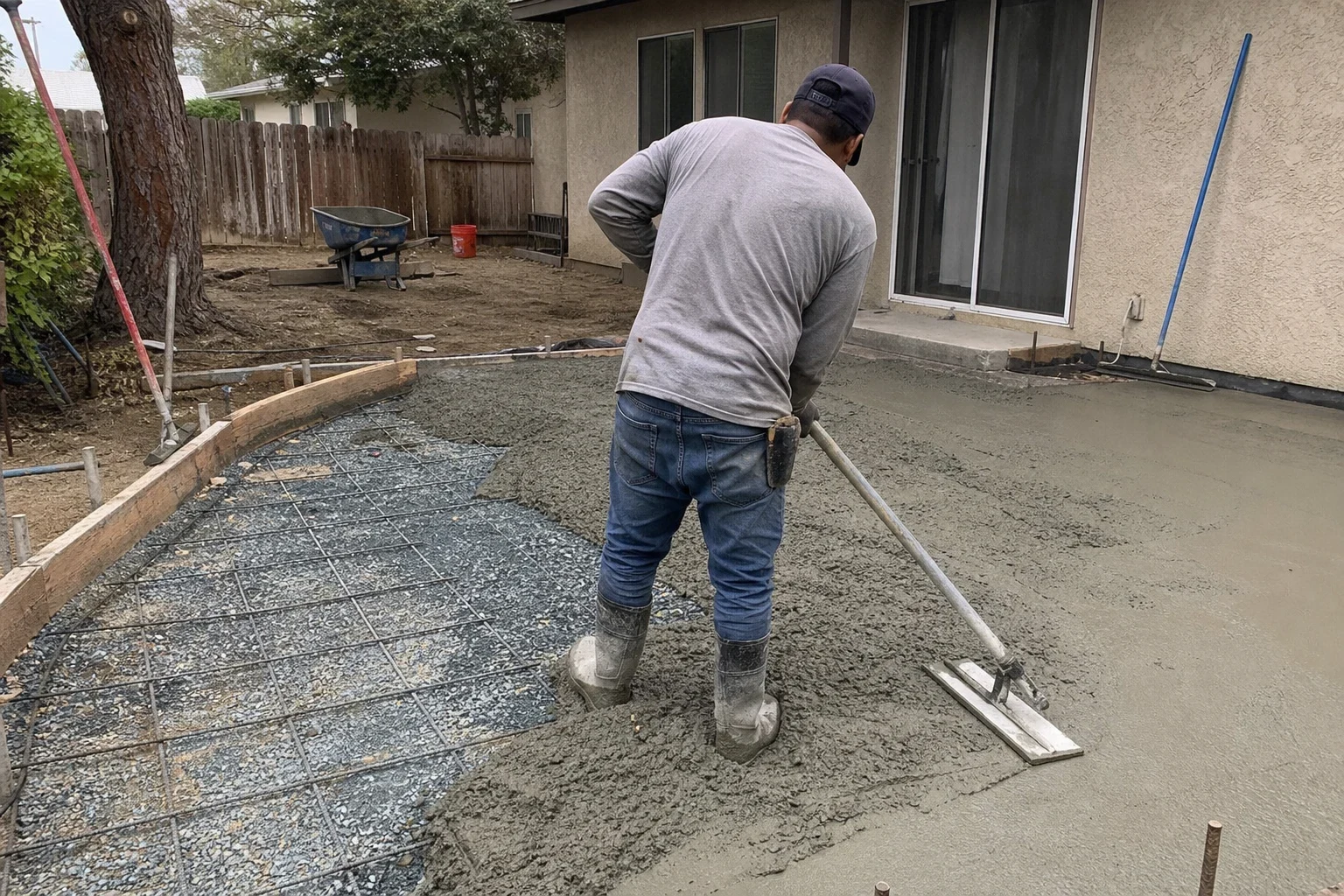
- We take out turf, roots, old pavers or a worn slab, then dig to a firm subgrade. Soft spots get removed instead of covered over.
- Compacted base
- A layer of crushed aggregate base is spread and compacted in lifts. Clay soil swells when wet and shrinks when dry, and a good base keeps that movement from reaching the surface.
- Reinforcement that fits the slab
- We use rebar on a grid for most backyards and explain when wire mesh or fiber in the mix makes sense. Rebar costs a little more but holds cracked sections tight if the ground shifts.
- Your choice of finish
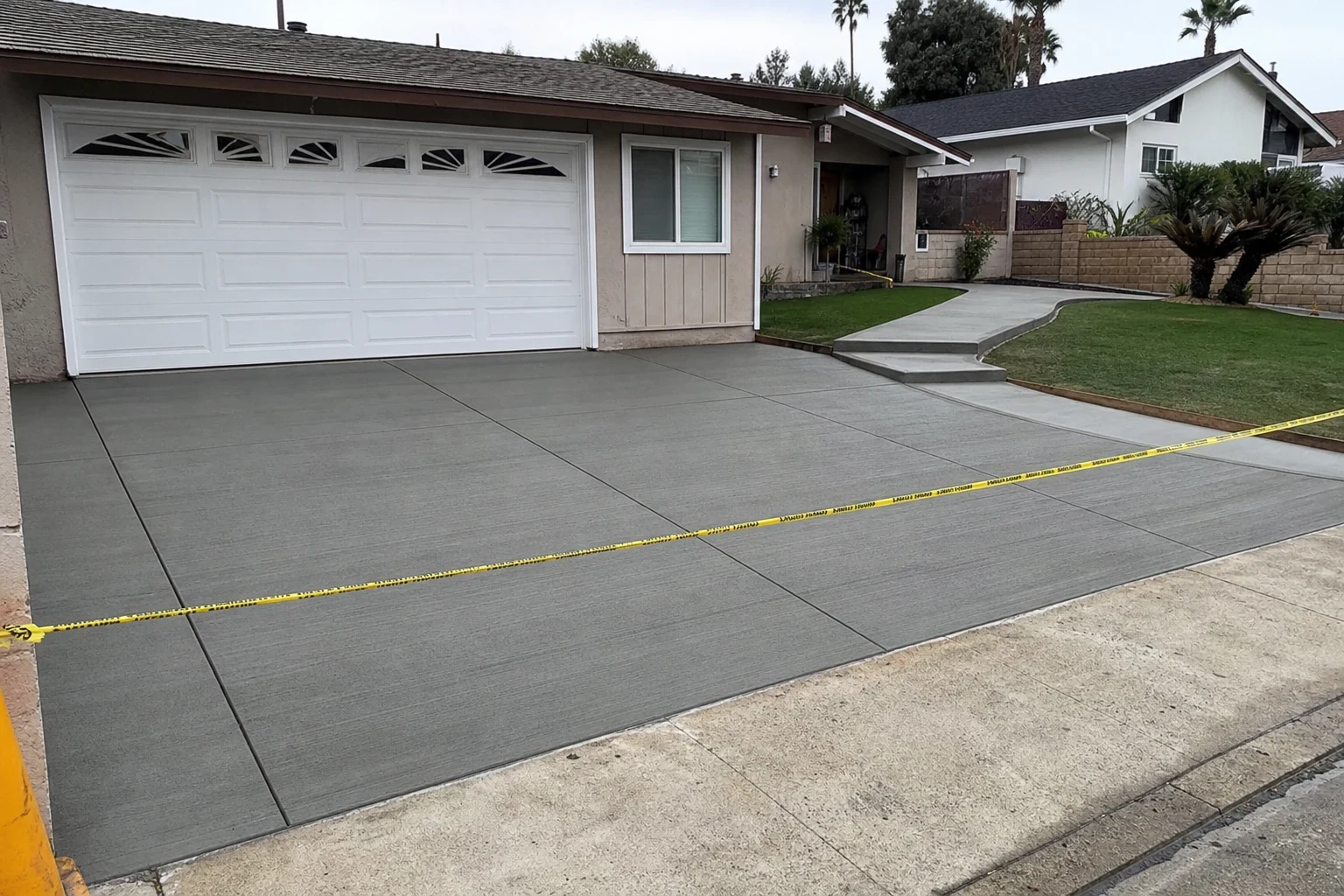
- Broom finish is the most affordable and grippy. A salt or sand finish stays cooler underfoot. Exposed aggregate hides dirt and grips well when wet, and stamped concrete gives a stone or wood look but needs resealing every few years.
- Cleanup
- We haul away soil, debris and forms, and leave your yard swept and ready once the slab has cured.
Signs a concrete backyard is the right call
The lawn never really takes
Shade, dogs or heavy foot traffic have worn the grass down to dirt, and reseeding hasn't held.
Your water bill keeps climbing
Turf drinks a lot through dry summers. Replacing part of it with concrete and a few planters cuts the watering you do.
Mud gets tracked inside
After winter rain, the path from the back door to the yard turns soft and the floors pay for it.
Old pavers are heaving
Pavers laid on a thin base often sink and tip over time. Replacing them with a poured slab on a proper base gives you one even surface.
You want room for furniture
A table, a grill or a fire feature needs a flat, stable surface that won't settle under the legs.
How the work goes
- 1
Walkthrough and finish samples
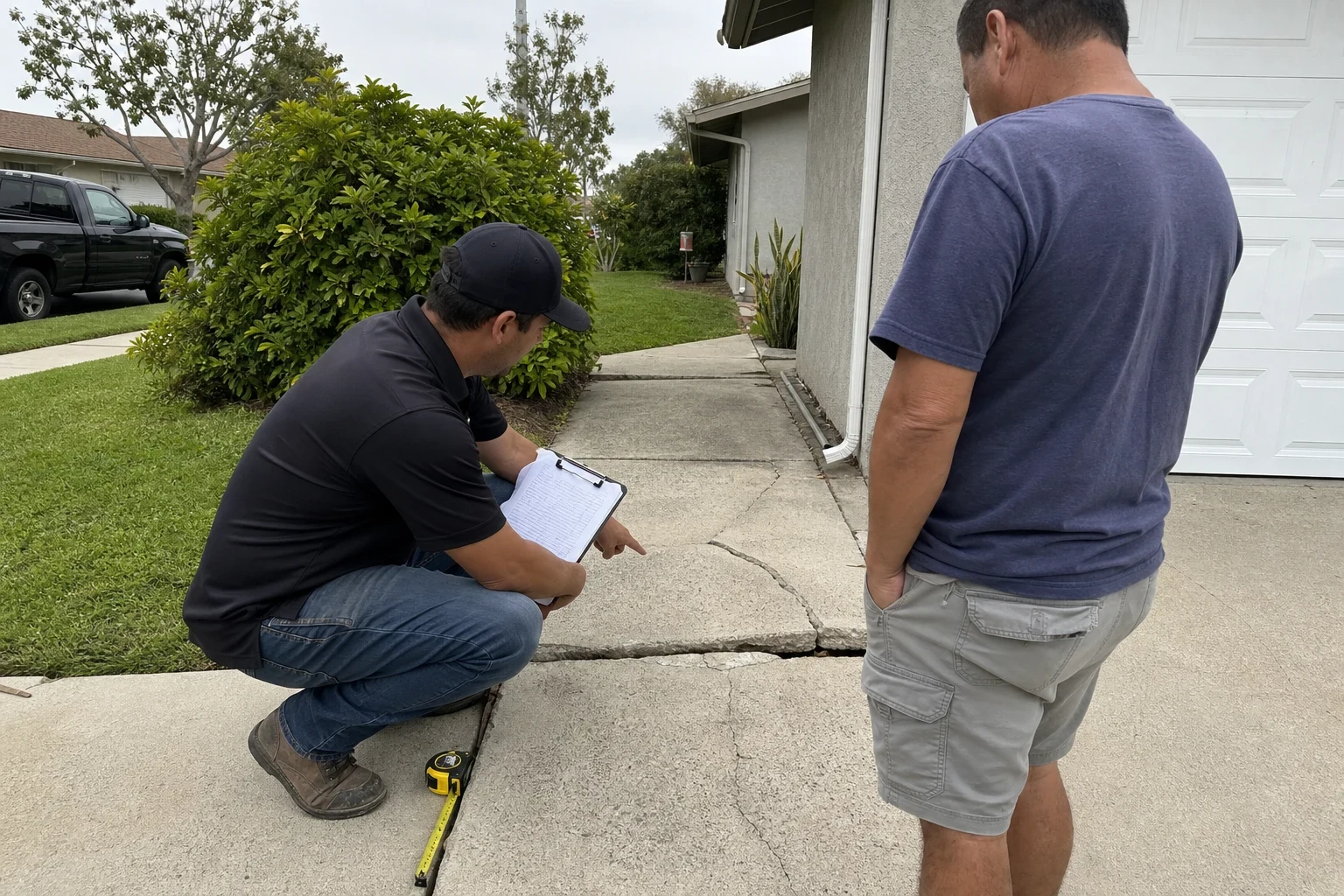
We measure the yard, check the slope and access, and show you finish and color options side by side. Afterward we put the price in writing, broken out by excavation, base, steel, concrete and finish, so nothing is lumped together.
- 2
Excavation and forms
Day one is usually digging, hauling and setting forms. If your neighborhood has an HOA, we can give you the layout and finish details for their review before we start.
- 3
Base, steel and pour
We compact the base, set the rebar on chairs so it sits inside the slab, and pour. Control joints are planned so any shrinkage cracks fall in straight lines where you won't notice them.
- 4
Finishing and curing
We apply the finish while the concrete can still be worked, then let the slab cure. Walking on it is usually okay within a couple of days. Give it roughly a week before moving patio furniture back, and wait longer for anything heavy like a hot tub or a loaded planter.
What moves the price of a backyard slab
No two backyards price out the same, because size, access and finish change from lot to lot. Your written estimate breaks the job into line items, so you can see each cost and trim or swap a choice if the budget calls for it. If something unexpected turns up once we dig, we talk it over with you before any change.
- Square footage and layout
- The bigger the slab, the more concrete, steel and labor it takes. A plain rectangle forms up quickly, while curved edges and lots of corners add hours of form work.
- Getting into the backyard
- If a truck chute or small loader fits through your gate, the pour moves fast. A tight side yard can mean wheelbarrows or renting a pump truck to reach the back.
- What comes out first
- Stripping turf is lighter work than breaking out an old slab or pavers, and hauling adays to the total.
- Finish and color
- Broom finish costs least. Salt finish, exposed aggregate, integral color and stamped patterns each add labor and material.
- Slope and drainage
- Sloped lots may need extra grading, a thicker edge or a drain line to move water away from your home.
Backyard concrete questions
Something not covered here? (949) 832-1518
Will my new concrete crack?
Concrete shrinks as it cures, so small cracks are normal. We cut control joints so those cracks form in straight, planned lines. A compacted base and rebar keep any crack from spreading or lifting.
Which finish stays coolest in summer?
Lighter colors and textured finishes like salt or sand finish stay more comfortable for bare feet than dark or smooth surfaces. Stamped concrete with a glossy sealer tends to run warmer. We can show you samples so you can feel the difference.
Do I need a permit for a backyard slab?
A simple flat slab often doesn't need a city permit, but drainage changes, retaining edges or work near property lines can. We check what applies to your yard and tell you before work begins. HOA approval is separate, and we can supply the details they ask for.
Is the work covered after you leave?
It is. Your backyard slab is backed by a 1-year warranty. When you have your written estimate in hand, we'll walk through exactly what that coverage includes so there are no surprises later.
Can you pour around my existing plants and planters?
Yes. We form around trees, beds and planters you want to keep and leave room so roots and irrigation lines aren't crushed. Large tree roots near the slab are worth a conversation, since they can lift concrete over time.
Ready to plan your backyard?
Tell us the size of your yard and how you want to use it. We will walk you through finishes, reinforcement and drainage, then set up a visit to measure.