ServicesGarage Floors
Concrete Garage Floors in Laguna Niguel
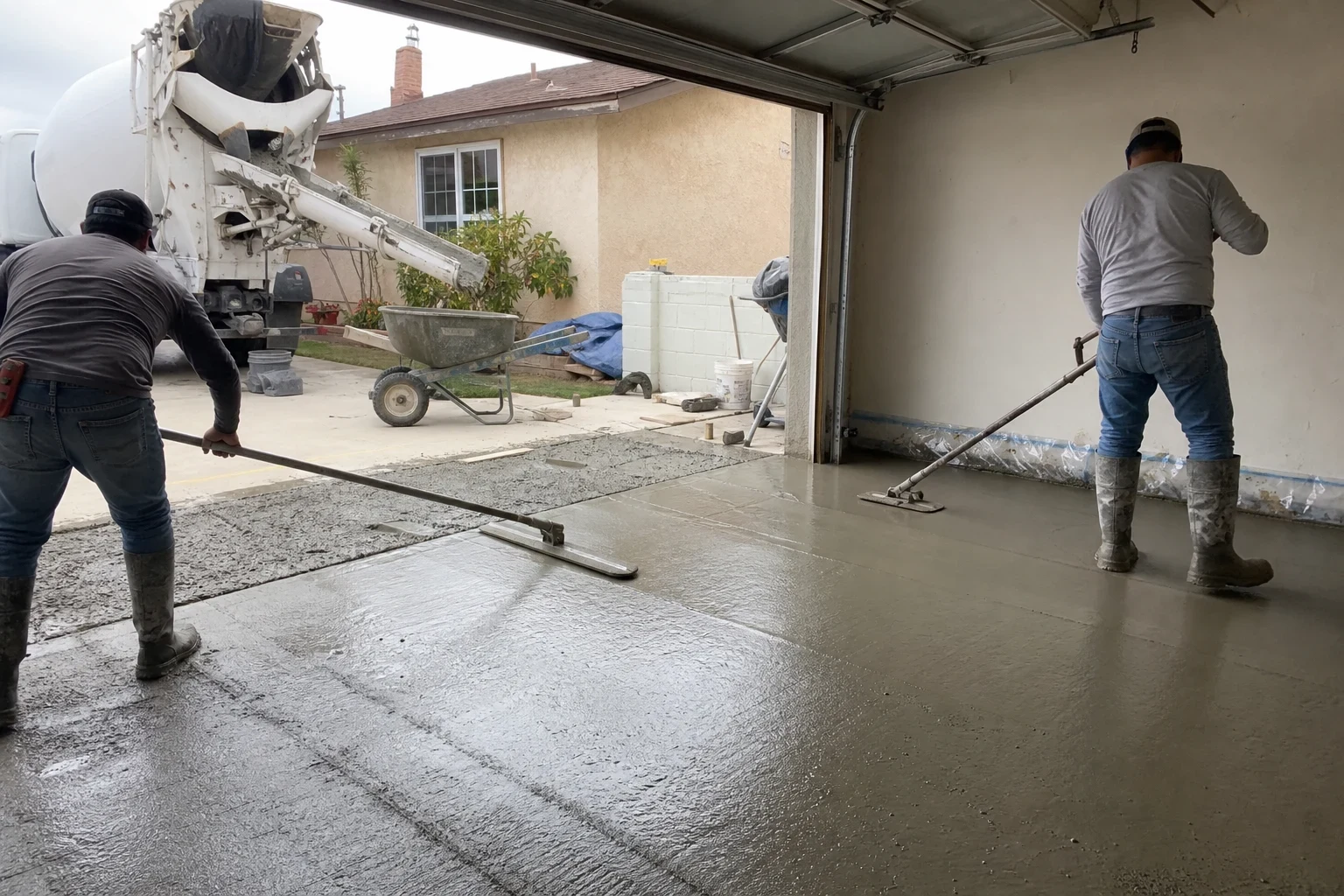
A garage floor carries the weight of your cars every day, so what goes under the surface matters as much as the finish. We remove the old slab, build a solid base and pour a floor with the mix, thickness and reinforcement your garage actually needs.
A floor built for weight, oil and years of parking
Once a garage slab has lifted, dropped unevenly or split into loose pieces, the lasting fix is a new floor on a base that has been prepared the right way. That is the work we do. Before anything is ordered, we walk you through each material choice and why it matters for your garage.
A garage floor really comes down to four decisions. First, mix strength: a garage usually gets a stronger mix than a patio, since tires turn and press on the same spots every day. Second, thickness, often increased where heavier vehicles sit. Third, rebar or wire mesh to keep the slab together if it cracks. Fourth, a vapor barrier so moisture from the soil stays out of your stored boxes and away from any future coating.
Our crew has more than 15+ years of concrete work behind it, and the company holds a license from the California State License Board (CSLB). Give us a call and we will point out which options are worth it for your garage and which you can leave out.
What your garage floor project includes
- Demolition and hauling
- The old slab gets broken up, loaded and taken off your property. What remains is an empty garage, ready for the new base.
- A compacted base
- We shape the subgrade, bring in base rock where the soil calls for it and compact it one layer at a time. That firm footing is what stops a new floor from sinking along the walls or at the door edge.
- Vapor barrier
- Before any concrete arrives, a plastic membrane is laid across the base to hold back ground moisture. Your stored things stay drier, and a future sealer or coating has a better surface to grip.
- Steel reinforcement
- Rebar is set up on chairs so it ends up in the middle of the slab's depth, where it actually helps. If your garage sees light use, we will explain when wire mesh does the job.
- Pour, slope and finish
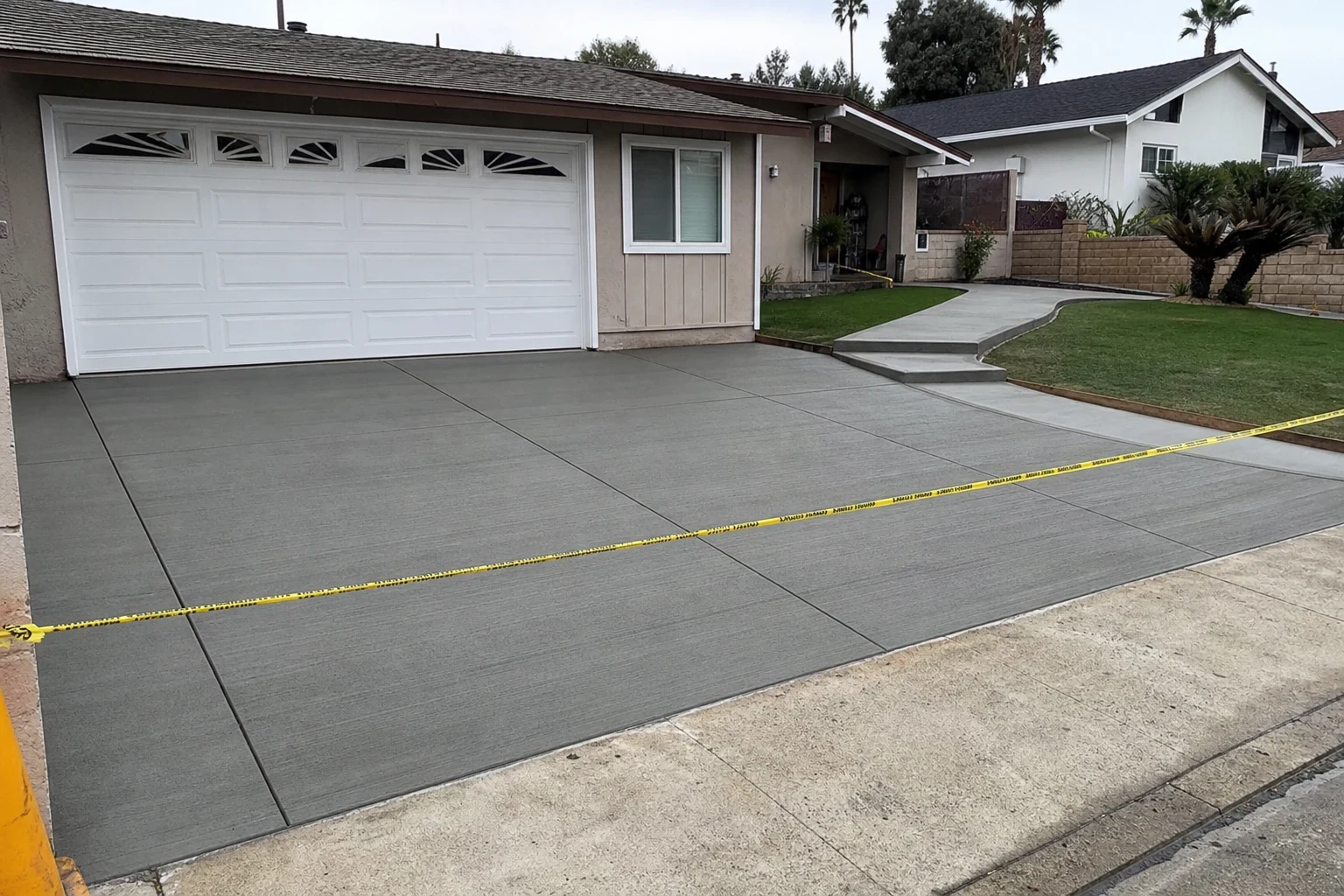
- The floor gets a gentle fall toward the garage door, so drips off a wet car head outside instead of to the back corners. A smooth steel-trowel surface is the usual pick, with an optional light broom texture at the entry for footing.
- Control joints and sealer
- Saw-cut joints give the slab a planned place to crack, in straight lines. After curing, a clear sealer goes on to help the surface shrug off oil and stains.
Signs it is time for a new garage floor
One section has dropped
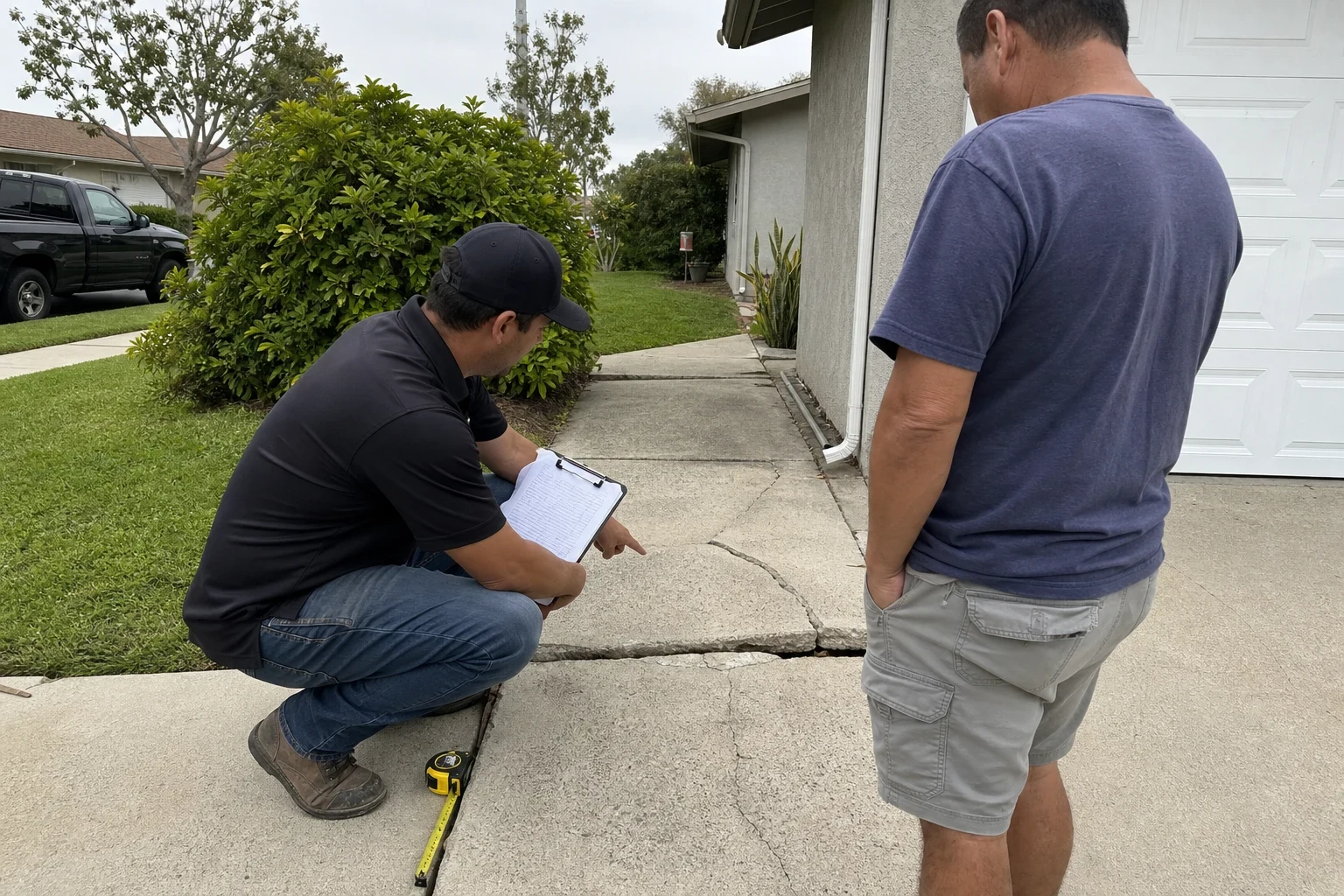
A slab piece sitting lower than its neighbors tells you the ground beneath it has compressed or washed away. A new floor gives us the chance to rebuild that base, not just the top.
Cracks keep widening
Thin surface lines are expected in any slab. Gaps wide enough to catch a screwdriver tip, or edges that no longer sit flush, generally mean the concrete has lost the support under it.
Water pools inside
When the floor tips the wrong direction, rain and car drips run toward your walls and stored items. A fresh pour lets us set the fall toward the door.
Lifting from soil movement
Expansive clay, which is common in south Orange County, swells with rain and shrinks in dry months. A floor that has tilted or risen does far better rebuilt on a properly prepared base.
Crumbling or flaking surface
Dusting, peeling layers and soft patches usually trace back to a weak original mix or rushed finishing. A surface like that wears quickly under tires and will not hold a coating.
How the job runs, start to finish
- 1
Phone call and site visit
We talk through what you are seeing and what you use the garage for. Then we look at the slab, measure, check access from the street and explain your material options in plain terms.
- 2
Written estimate and permit
You get a written estimate that lists removal, base, reinforcement, finish and sealer separately. If the city requires a permit for your project, we pull it.
- 3
Demo and base day
We remove the old floor, haul it away, prepare and compact the base, then lay the vapor barrier and set the steel. Your driveway and walls are protected while we work.
- 4
Pour and finish
The concrete is placed, leveled, sloped and troweled in one session. We cut control joints once the surface can take it and clean up before we leave.
- 5
Curing and handoff
You can usually walk on the floor after a day or two. We ask that cars stay off for about a week, and we will apply the sealer once the slab has cured enough to take it.
What shapes the price of a garage floor
No two garages measure or behave quite the same, so the number comes from what we find during the site visit. Your estimate is written out line by line, with removal, base, steel, finish and sealer each listed on its own. That way you can weigh each option against a real figure before you decide.
- Square footage and slab depth
- A two-car garage simply uses more concrete than a single. Going thicker for a heavy truck or shop equipment adds material too.
- Breaking out the old floor
- An old slab that is extra thick or full of steel takes more time to demolish, and the debris weighs more to haul.
- What is under the slab
- Soft or damp soil, or expansive clay, can call for more base rock and extra compaction passes before the pour.
- Getting concrete to the garage
- When the garage door opens right onto the driveway, the truck can chute it in. A long walk or tight approach may mean a pump or more hands on the crew.
- Steel, surface and sealer choices
- Rebar runs higher than wire mesh, and the finish and sealer you pick move the total as well. We say what each one buys you, so nothing is on the estimate that will not earn its keep.
Garage floor questions we hear often
Something not covered here? (949) 832-1518
How long until I can park in my garage again?
Give it roughly a week before a car rolls onto the new slab. You can usually walk across it after a day or two. Because concrete keeps hardening for weeks, we also suggest holding off on floor jacks or other heavy point loads for the first month.
Do I need rebar, or is wire mesh enough?
For a garage where cars park every day, we usually recommend rebar. It holds its position during the pour and keeps sections tied together if a crack forms. Mesh can be fine for a garage used only for storage, and we will tell you plainly which fits your use.
Will my new floor crack?
Some cracking is part of how concrete behaves, since it loses a little volume as the water leaves it. The control joints we cut give that movement a planned place to go, in straight lines that blend in. The compacted base and steel are what keep the pieces level and together.
Can I put an epoxy coating on it later?
Yes. The vapor barrier underneath and a smooth trowel finish on top set the floor up well for a coating. Wait until the slab has fully cured, which is usually about a month, before any coating goes on.
Is there a warranty on the work?
Yes. Our garage floors carry a 1-year warranty. If a workmanship issue shows up during that year, call us and we will come out to see it.
Do I need to empty the whole garage?
Yes, everything has to be out before demolition starts. Plenty of homeowners rent a portable storage container or borrow a spare room for the week. We will plan the schedule with you so the garage is out of use for as short a stretch as possible.
Ready to replace that tired garage floor?
Tell us how you use your garage and what the floor is doing now. We will walk you through the mix, base and reinforcement options and set up a time to measure.