ServicesConcrete Courtyards
Concrete Courtyards in Laguna Niguel
A courtyard is the room between your home and the outdoors, so the surface has to look right and drain right. We walk you through finishes like exposed aggregate, salt finish and stamped patterns, then pour a slab built for daily use.
A Courtyard Surface Chosen on Purpose
Courtyards are usually closed in on two or three sides by walls, planters or the house itself. That makes them different from an open patio. Water has fewer places to go, the space is seen from inside your home, and you often walk across it barefoot or in house shoes.
We start with the material question because it shapes everything else. A light broom finish is simple and slip resistant. Salt finish gives a soft, pitted texture that stays cool underfoot. Exposed aggregate shows the stone in the mix and hides dirt well. Stamped concrete can mimic flagstone or Saltillo tile, which pairs nicely with the Spanish and Mediterranean styles common in south Orange County. We explain how each one wears, cleans and ages so you pick with clear eyes.
We have been in business 15+ years, and courtyards are some of our favorite jobs because the details show so plainly.
What Your Courtyard Project Includes
- Removal of the old surface
- We break out and haul away old concrete, loose pavers or tired brick. The ground gets cleared down to firm soil before anything new goes in.
- Grading for drainage
- We slope the slab away from your home's walls and toward drains or open ground. In an enclosed courtyard this step matters more than any finish.
- Base and reinforcement
- A compacted gravel base goes down first, followed by rebar or wire mesh set at the right height in the slab. Clay soil is common in the area, and a solid base helps the concrete ride out seasonal soil movement.
- Your chosen finish and color
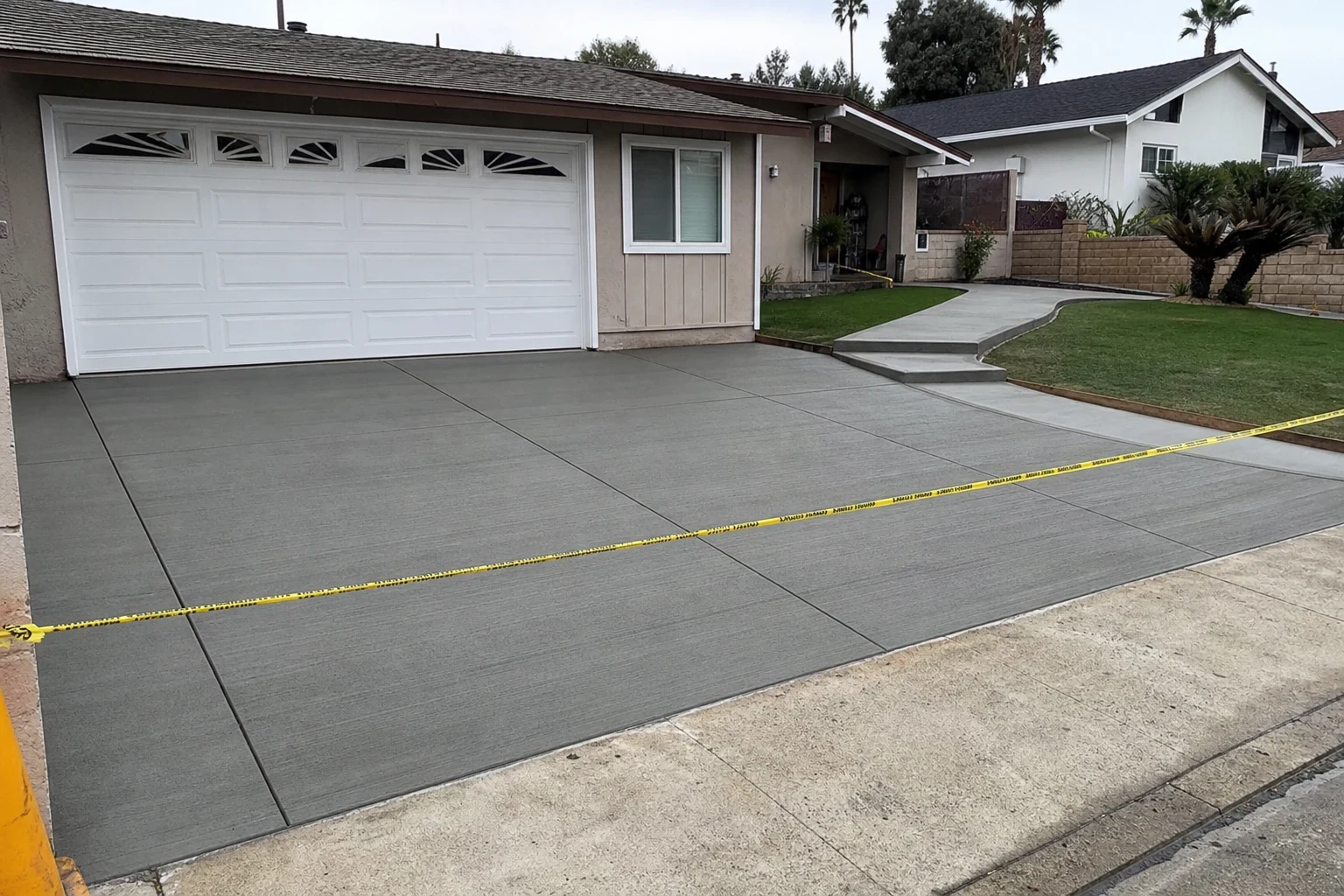
- Integral color is mixed through the concrete, so chips do not reveal gray underneath. We can also add a contrasting border, a smooth trowel band or a pattern change at doorways.
- Control joints and sealing
- Joints are cut where cracks would naturally want to form, so they stay in neat lines. Decorative finishes get a sealer that deepens color and resists stains.
Signs It Is Time for a New Courtyard
Water pools near the house
If puddles sit against a wall or doorway after rain or watering, the slope is wrong. That water can work its way toward your home's foundation and stucco.
Pavers have shifted or sunk
Uneven pavers and brick catch toes and furniture legs. A continuous slab gives you a flat, steady surface.
Wide cracks and lifted sections
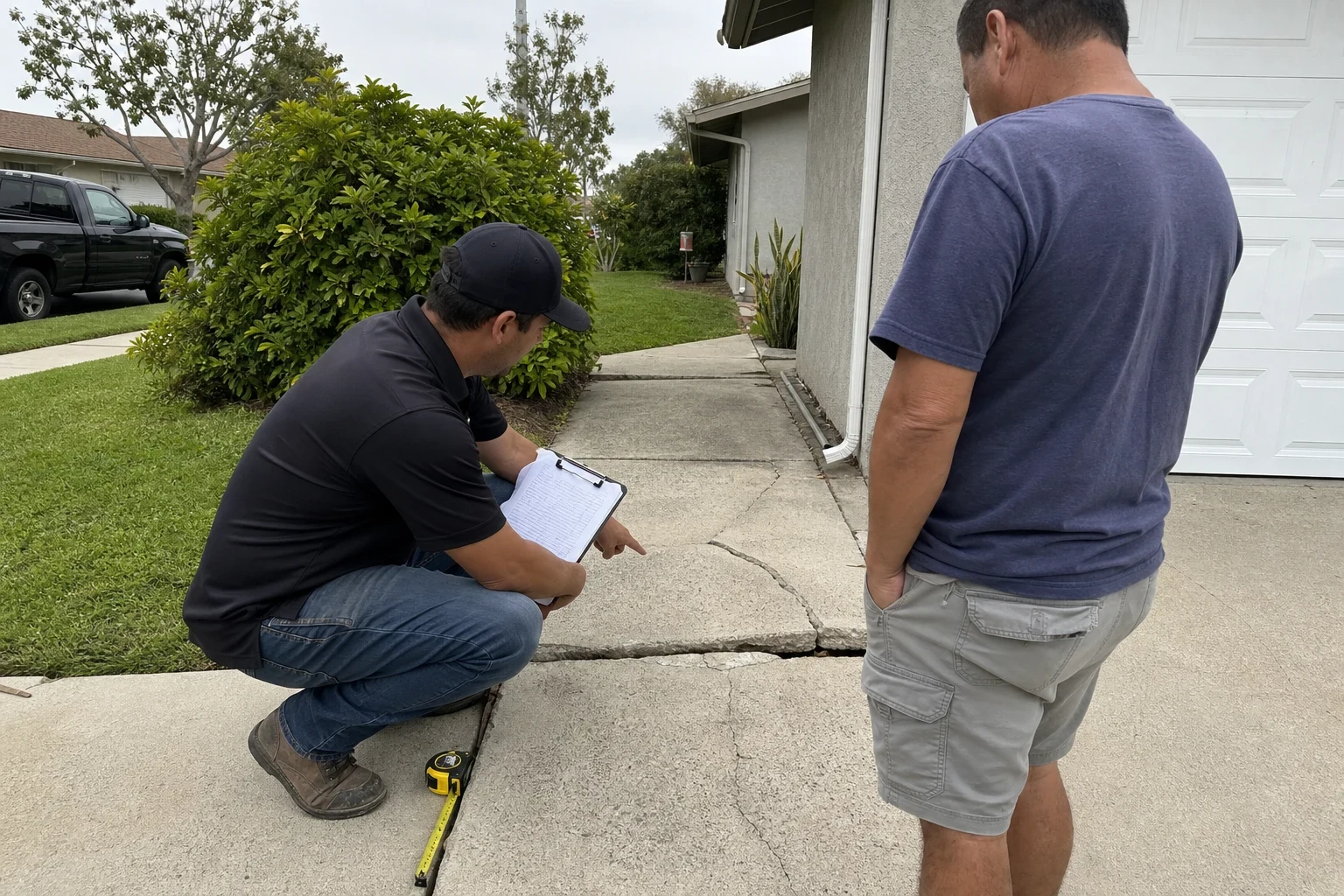
An old slab with heaved edges or cracks you can fit a coin into is usually past its useful life. We will tell you plainly if replacing it makes sense.
The surface no longer fits your home
Plain gray concrete from decades ago can look out of place after a remodel. A new color or texture can tie the courtyard back to the house.
What Shapes Your Courtyard Estimate
Square footage gives us a starting point, but it rarely tells the whole story in a courtyard. How we get material into the space, the finish you pick and what turns up under the old surface matter just as much. Each of these shows up as its own line in your written estimate, so you can see where the money goes before work begins.
Size and shape
Curves, angles and cutouts around planters take more forming time than a simple rectangle.
Access to the space
A courtyard reached only through a side gate or the house may need a concrete pump or extra labor to move material.
Finish and color
A broom finish is the most economical. Integral color, exposed aggregate and stamped patterns each add material and skilled labor.
Drainage work
Adding area drains or regrading to move water away from your home adds cost but protects the walls around the courtyard.
Removal of the old surface
Thick old slabs or heavily reinforced concrete take longer to break out and haul away than loose pavers.
How a Courtyard Job Runs
- 1
Site visit and material talk
We measure, watch how water moves across the space and bring finish samples to look at in your own light. Afterward we put the scope in writing, broken out piece by piece, so you know exactly what the job involves.
- 2
Demolition and prep
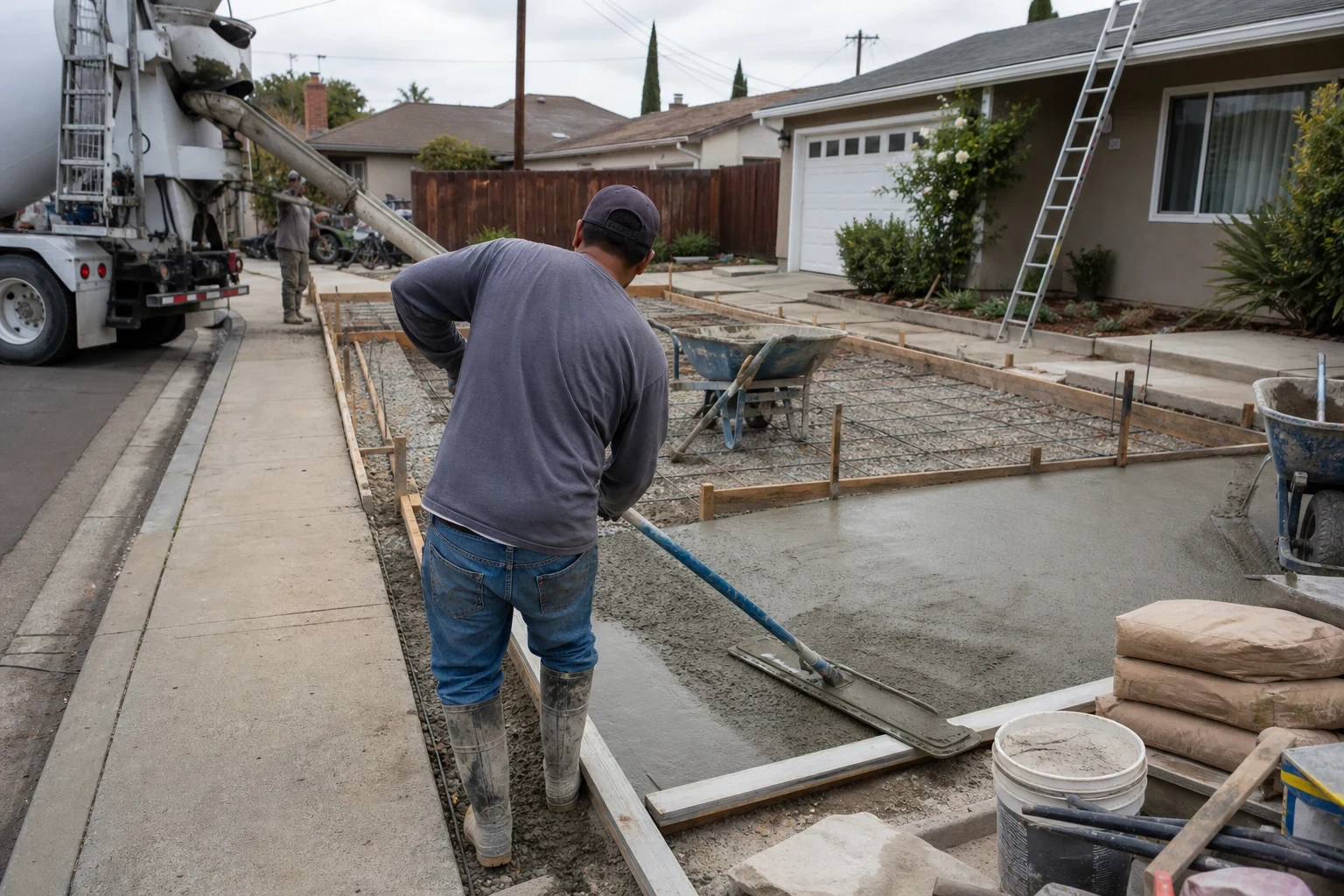
We protect walls, doors and plants, then remove the old surface and set the grade. Forms go in and the base is compacted.
- 3
Pour and finish
The concrete is placed, leveled and finished in one go while it is workable. Narrow gates sometimes mean we pump or wheelbarrow the mix in, and we plan for that ahead of time.
- 4
Cure, seal and clean up
The slab cures for several days before light foot traffic and longer before heavy furniture. We seal where needed, sweep up and haul away our debris.
Courtyard Questions We Hear Often
Which finish stays coolest in the sun?
Lighter colors stay cooler than dark ones, no matter the texture. A salt finish or light exposed aggregate in a tan or buff tone is comfortable for bare feet. Dark charcoal stamped concrete looks striking but holds more heat.
Will my courtyard crack?
All concrete can develop small cracks as it cures and as soil moves. Good base prep, reinforcement and well-placed control joints keep cracks small and mostly hidden in the joint lines. We will show you where the joints will go before we pour.
What credentials and coverage come with the job?
Our company is licensed by the California State License Board (CSLB). Every courtyard we pour is backed by a 1-year warranty, and we are happy to walk you through what it covers when we meet.
How long until we can use the courtyard?
Most people can walk on it in about two days. We suggest waiting about a week before setting heavy planters or outdoor furniture on it, and longer in cool, damp weather.
Can the courtyard match my patio or walkway?
Usually, yes. We can match color, finish and joint spacing so the courtyard flows into a patio or walkways and sidewalks. If an older surface has faded, we will bring samples so you can see how close the match will be.
Ready to Picture Your New Courtyard
Tell us about the space and how you want to use it. We will talk through finishes and colors with you and set up a visit to measure.